Kew Gardens displays climate-damaged dead oak, highlighting shift in urban tree management
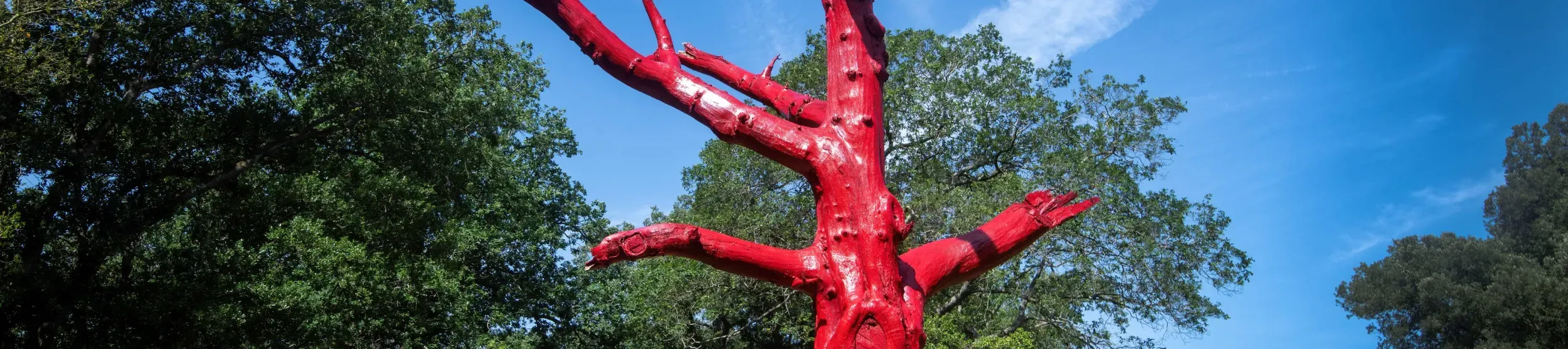
Royal Botanic Gardens, Kew unveiled the ‘Climate Changed Oak’ on 22 June 2026, the opening day of London Climate Action Week. The tree is a dead red oak retained within Kew’s living landscape and painted red to show visitors how climate change is affecting plant collections and garden management.
According to Kew, the red oak was one of 400 trees at Kew Gardens that died after the drought and extreme heat of summer 2022. While some other failed trees were felled, this one was retained as an example of the long-term effects that hotter, drier summers can have on tree care and irrigation responses.
Kew’s 2024 Landscape Succession Plan stated that up to 50% of Kew’s existing 11,000 trees could be vulnerable to climate change by 2090. The new display is therefore not only an installation, but also a message that botanic and public gardens need to build tree-health monitoring, soil-moisture management and drought-stress responses into their operating plans.
Kew said its Tree Collections and Arboriculture team has been working with the Greater London Authority to assess 1.2 million trees across London. Kew reported that 62% showed low suitability and 10% were vulnerable, warning that 72% of London’s urban canopy could be at risk by the end of the century.
A Hungarian oak sapling named the ‘Tree of Hope’ was also planted beside the display. Kew said the species was selected by its experts to demonstrate tolerance of a warmer climate, underscoring that future public-garden tree selection should consider survival rates, shade provision and biodiversity support together.
The case shows that climate-adaptive garden management is no longer only a long-term projection. Recording tree losses, assessing vulnerable species, planting alternative species and setting irrigation priorities are becoming practical tasks for urban gardens and botanic gardens facing repeated heat and drought.