English
한국어
English
Español
中文
हिंदी
Home
News
Community
Dictionary
English
한국어
English
Español
中文
हिंदी
View list
Needle flower 'Callistoga'
Epilobium canum
'Calistoga'
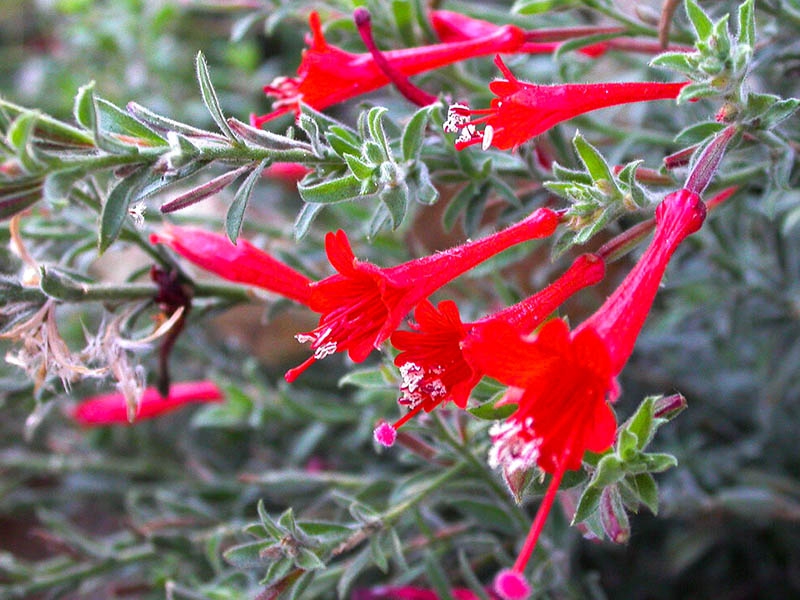
Epilobium canum 'Calistoga' has the following characteristics and cultivation methods. Growth Characteristics - Growth Environment: It prefers a mild climate and thrives in sunny locations. - Soil: Well-drained sandy soil is suitable, and it can tolerate relatively dry environments. - Growth Habit: It grows upright, reaching a height of approximately 30–60 cm. - Flowers: It blooms with showy red or orange flowers from summer to early autumn. Propagation Methods - Seeds: It can be propagated by sowing seeds directly in spring or autumn. - Cuttings: Propagation is possible via cuttings during the summer, and the success rate is high. Cultivation Methods - Watering: It dislikes excessive water, so it is best not to water too frequently. Adjust watering frequency during the hot summer months. - Fertilizer: It is recommended to apply a moderate amount of organic fertilizer in spring and summer. - Pruning: After the flowers have faded, pruning helps shape the plant and encourages more blooms the following year. Uses in the Garden - Uses: It can be used as a border plant, in rock gardens, and in nature gardens, featuring beautiful, vibrant flower colors. - Artificial Arrangement: It can be placed alongside other perennial plants to create a harmonious blend of colors and textures. Important Pests and Control Methods - Diseases: Be careful with drainage, as overwatering can lead to root rot. - Pests: While pest damage is generally minimal, if aphids or spider mites appear, wash them off with soapy water or use an appropriate insecticide. The Callistoga is a relatively easy-to-care-for plant and an attractive choice for adding beauty to your garden.
Plant Family
Onagraceae
Height
30~60cm
Spread
60~120cm
Colors
red
Bloom Period
August
Water Needs
commonly
Exposure
Sunny
Freezing Resistance
-10°C
Needle flower 'Dublin'
Epilobium canum
'Dublin'
Needleflower Canum
Epilobium canum