English
한국어
English
Español
中文
हिंदी
Home
News
Community
Dictionary
English
한국어
English
Español
中文
हिंदी
View list
Anemone
Eranthis stellata
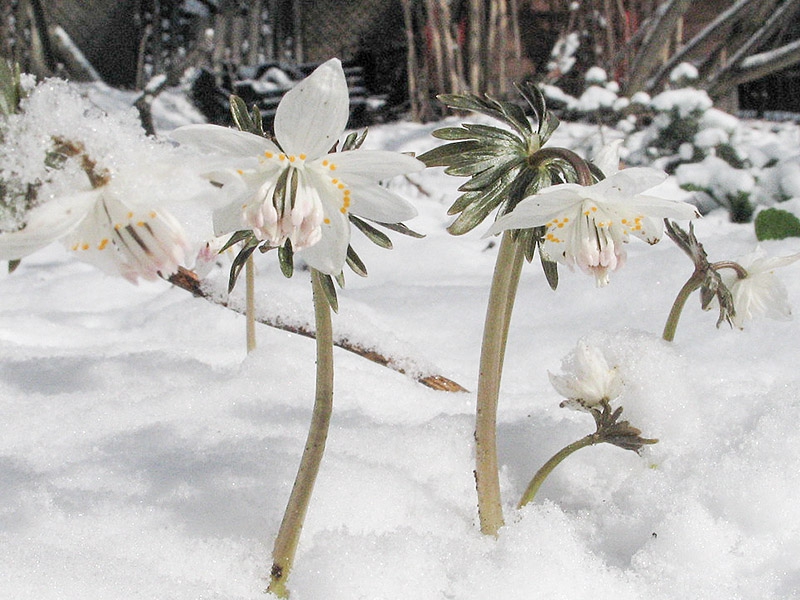
Eranthis stellata is a perennial herbaceous plant native to East Asia, including Korea. It is one of the most popular plants in horticulture and gardens, particularly due to its beautiful flowers. The following is information regarding the main growth characteristics, propagation methods, cultivation methods, garden uses, and important pests and diseases and control methods of Eranthis stellata. Growth Characteristics - Habitat: Eranthis stellata grows mainly in shady areas of forests and mountainous regions. It prefers environments with fertile soil and moderate humidity. - Flowers: It blooms with white flowers in early spring, between February and March. The petals number about 5 to 6, and the yellow stamens in the center are a distinctive feature. - Leaves: Thin, somewhat rounded leaves grow after the flowers have faded. Propagation Methods - Seed Propagation: It can be propagated by seeds. Seeds form after the flowers have faded; once fully ripe, they can be collected and sown in the autumn or the following spring. - Propagation by Division: This method involves propagating plants by separating them, typically by dividing mature plants into multiple individuals. This method is useful when faster propagation is desired. Cultivation Methods - Soil Conditions: Well-drained, fertile soil is suitable. It prefers soil with an acidic to neutral pH. - Sunlight: It thrives in partial shade or in locations with some sunlight. - Watering: Avoid overwatering, and pay attention to drainage, especially during the summer. If there is sufficient natural rainfall, additional watering may not be necessary. Utilization in the Garden - Landscape Creation: Early spring flowers serve as an attractive focal point in the garden and can be planted alongside other spring flowers to create a harmonious landscape. - Shade Garden: Shaded garden spaces can be utilized to create a natural forest atmosphere. Important Pests and Control Methods - Although Anemone stellata is relatively resistant to pests and diseases, leaf mold or root rot may occur in environments with excessive moisture or poor ventilation. - Prevention and Management: - Prevent excessive moisture by maintaining proper drainage and ventilation. - If disease is detected, immediately remove the affected parts and use appropriate pesticides if necessary. - If natural control is preferred, crushed sulfur can also be used. Based on this information, you can safely and beautifully cultivate Anemone stellata in your garden.
Plant Family
Ranunculaceae
Height
10~20cm
Colors
white
Bloom Period
March to April
Water Needs
commonly
Exposure
semi-shaded area
Freezing Resistance
-15°C
Flower grass
Eragrostis spectabilis
Byeonsan Windflower
Eranthis byunsanensis