English
한국어
English
Español
中文
हिंदी
Home
News
Community
Dictionary
English
한국어
English
Español
中文
हिंदी
View list
Revolutionary Elephant
Erythronium revolutum
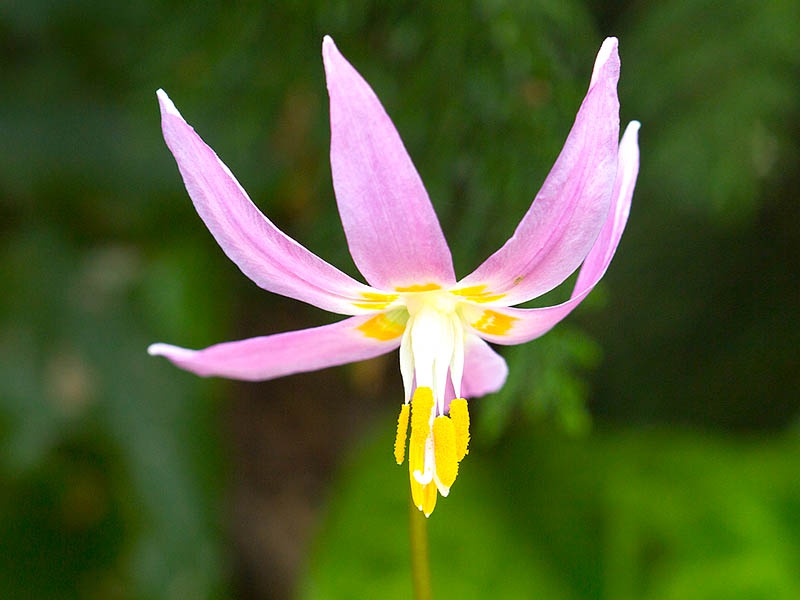
Erythronium revolutum is a perennial herbaceous plant belonging to the Liliaceae family, popular in gardens due to its unique flower and leaf shapes. The following is information regarding this plant's growth characteristics, propagation methods, cultivation methods, garden uses, major pests and diseases, and control methods. Growth Characteristics - Habitat: It thrives in moist forest areas and grows well in partial shade. - Soil: It grows well in soil rich in organic matter and withering. - Growth Cycle: It is characterized by flowering in the spring and the above-ground parts wilting in the summer. Propagation Methods - Seeds: Propagation by seeds is possible, but germination is slow and may take more than two years. - Division: Propagation by properly dividing the bulbs is a common method. It can be propagated through division in the autumn or early spring. Cultivation Methods - Planting Time: Autumn is the optimal time; plant dormant bulbs. 2. Location: Ideal for partial shade; it is best to avoid strong direct sunlight. - Watering: Maintain humidity well, but be careful not to overwater. - Fertilization: It is recommended to apply organic fertilizer in the spring. Uses in the Garden - Erythronium revolutum is suitable for planting in naturalized gardens or shady areas. Its uniquely attractive flowers can add a distinctive atmosphere to the garden. Important Pests and Control Methods - Diseases: Fungal diseases may occur if the soil is overwatered. Proper drainage management is important for prevention. - Pests: Snails and slugs can occasionally cause problems. They can be controlled by removing them manually or using attractants. With this information, you will be able to grow a healthy Erythronium revolutum and enjoy its unique aesthetic effect in your garden.
Plant Family
Lily family
Height
20~30cm
Spread
10~15cm
Colors
pink
Bloom Period
April~May
Water Needs
commonly
Exposure
semi-shaded area
Freezing Resistance
-20°C
Yellow-flowered Erythronium
Erythronium umbilicatum
Erythroniumse
Erythronium tuolumnense