English
한국어
English
Español
中文
हिंदी
Home
News
Community
Dictionary
English
한국어
English
Español
中文
हिंदी
View list
Erythronium 'Snowflake'
Erythronium dens-canis
'Snowflake'
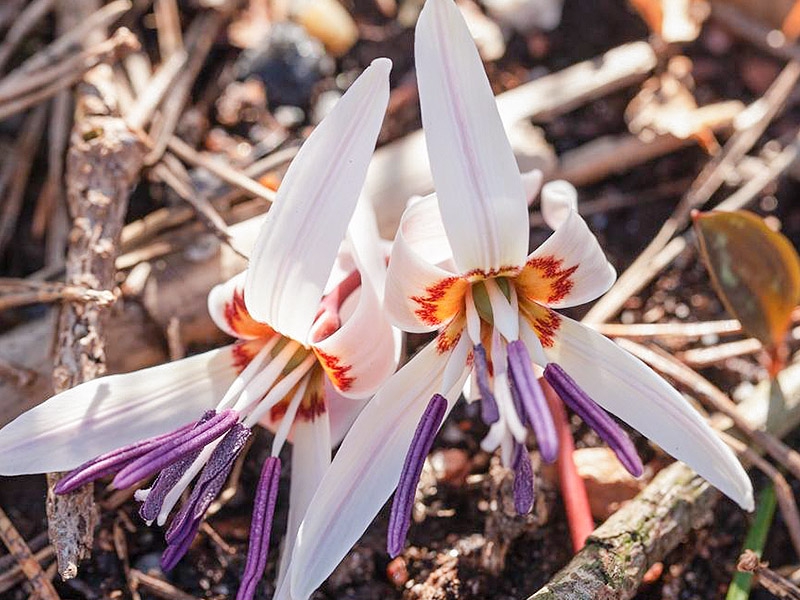
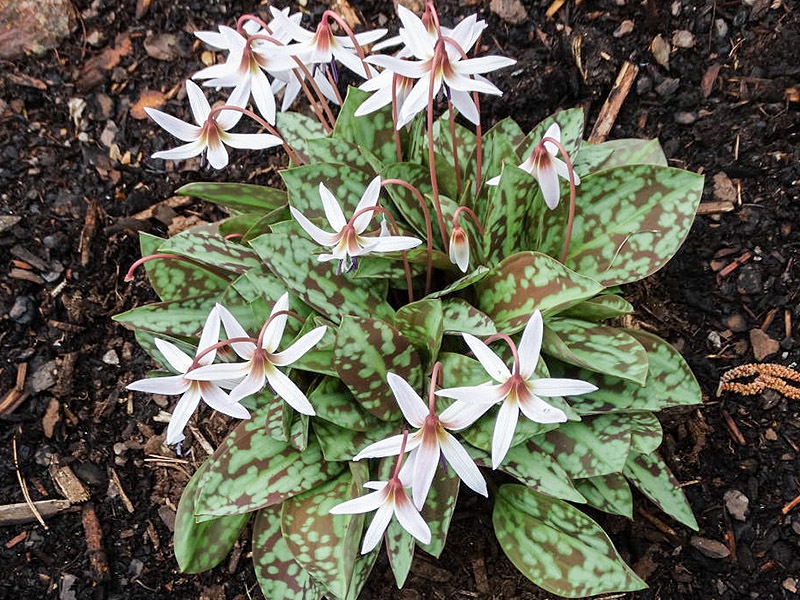
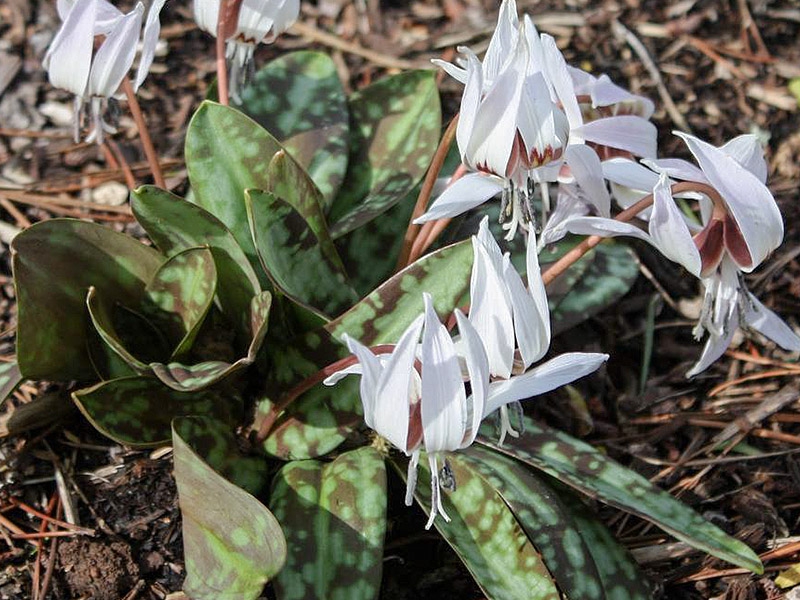
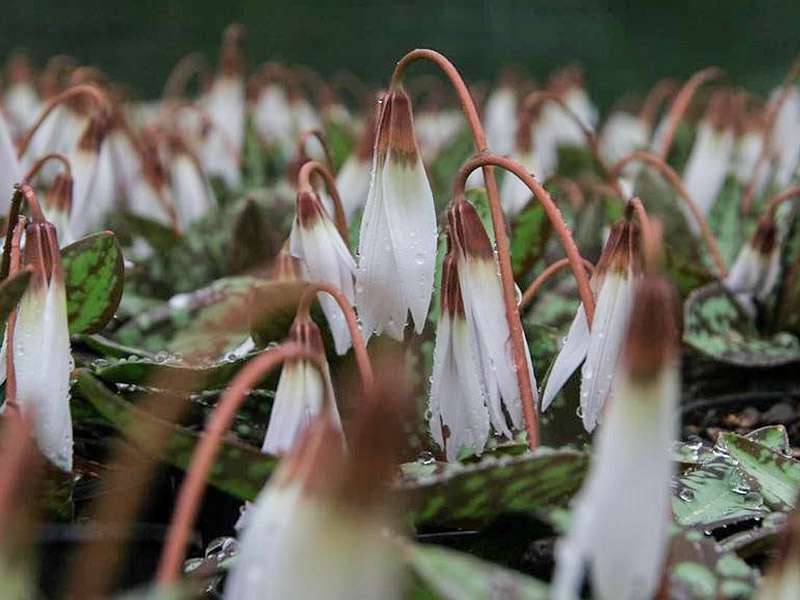
Growth Characteristics Erythronium dens-canis 'Snowflake' is a perennial herbaceous plant belonging to the Liliaceae family, native primarily to Europe. 'Snowflake' produces pure white flowers, and its leaves are elongated and patterned. This plant thrives in moist partial shade and blooms in the spring. It is able to withstand cold winters and undergoes a winter dormancy period. Propagation Methods Propagation is mainly used through bulb division and seeds. Bulb division involves separating and replanting bulbs in the autumn, and it is important to select healthy bulbs. In the case of seed propagation, it takes some time for germination after sowing, and the germination rate may be low. Cultivation Methods Erythronium dens-canis 'Snowflake' prefers well-drained soil and grows well in slightly acidic to neutral soil. It is ideal to cultivate it in a partial shaded environment that maintains moisture. During the summer, water thoroughly to prevent the soil from drying out. Regular fertilizer application is not necessary; in fact, over-fertilizing can inhibit growth. Uses in the GardenThis plant is primarily used to create beautiful spring landscapes by planting it in clusters in gardens. It is particularly effective when planted under trees, in semi-shaded areas, or in moist locations. It is also suitable for use as a foreground plant in flowerbeds. Important Pests and Control Methods The 'Snowflake' Erythronium is relatively resistant to pests and diseases, but care must be taken with drainage as the bulbs can rot if they become waterlogged. Slugs and snails may gnaw on the leaves, so preventive measures should be taken using pesticides or by natural methods. Additionally, ensuring good ventilation is important to prevent fungal diseases.
Plant Family
Lily family
Height
10~25cm
Spread
10~12cm
Colors
white
Bloom Period
April~May
Water Needs
commonly
Exposure
semi-shaded area
Freezing Resistance
-20°C
Erythronium oregonom
Erythronium oregonum
Erythronium 'Rose Queen'
Erythronium dens-canis
'Rose Queen'