English
한국어
English
Español
中文
हिंदी
Home
News
Community
Dictionary
English
한국어
English
Español
中文
हिंदी
View list
Euphorbia 'Snowflake'
Euphorbia horrida
'Snow Flake'
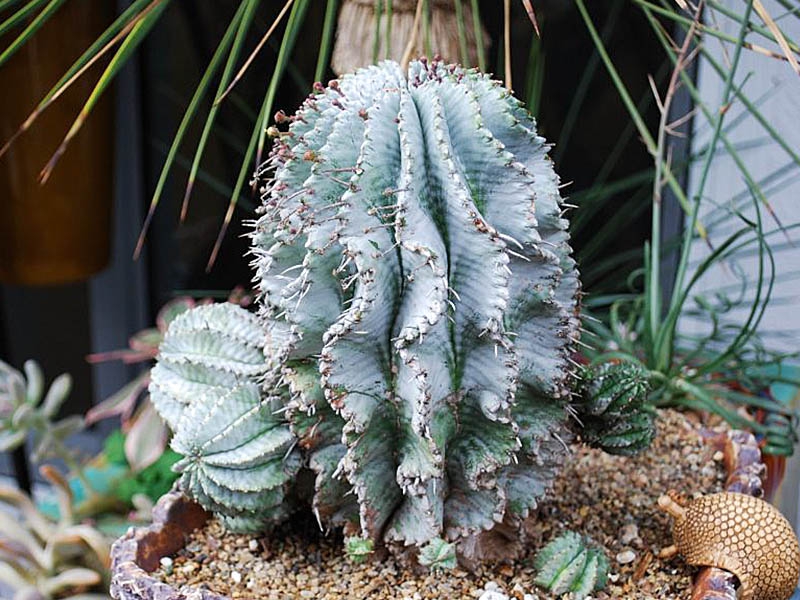
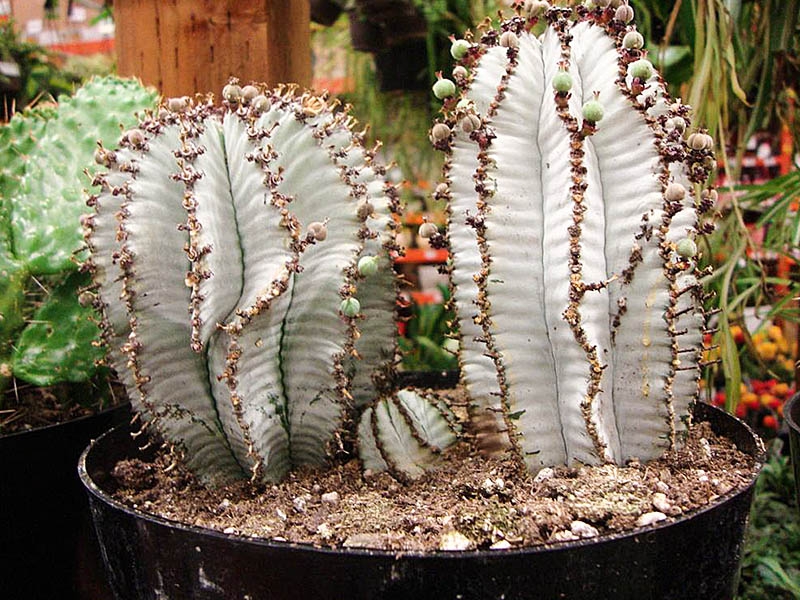
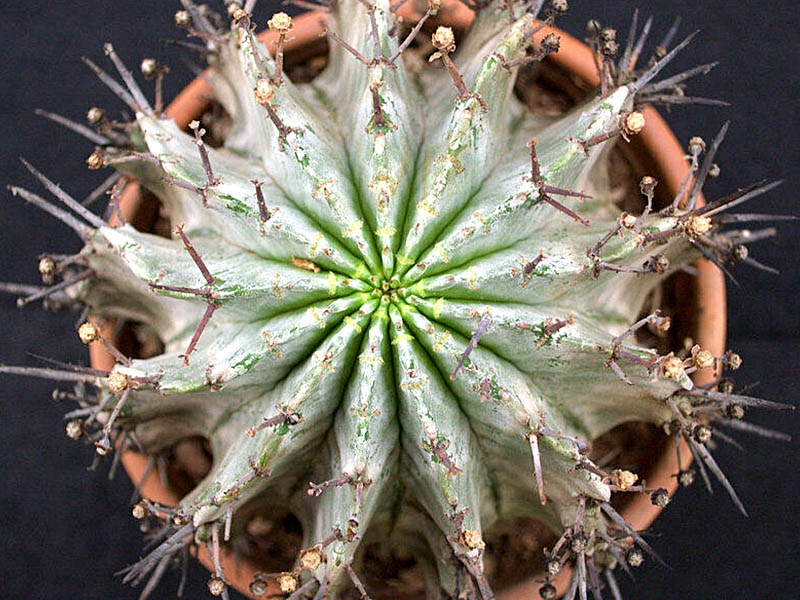
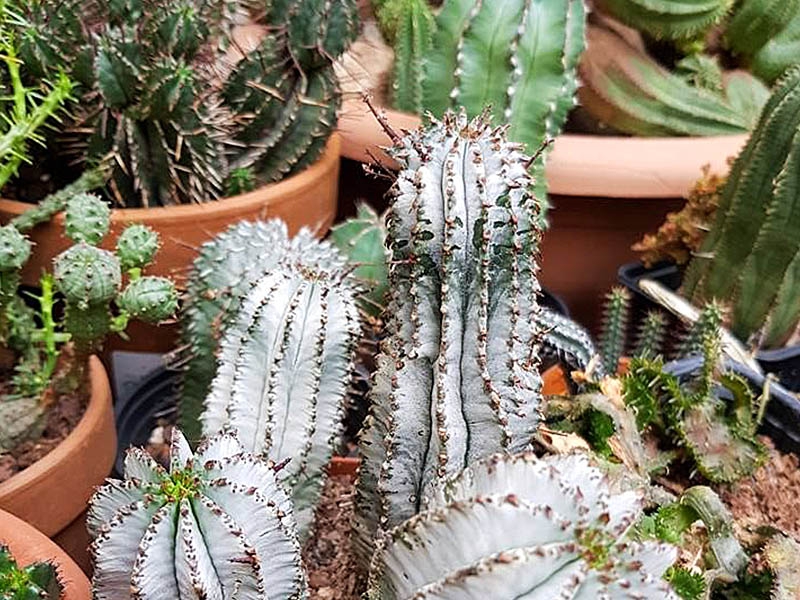
Growth Characteristics of Euphorbia 'Snow Flake' Euphorbia 'Snow Flake' belongs to the succulent family and primarily grows in a form similar to a cactus. This plant grows in a clump composed of multiple calcareous stems, each of which is covered in thorns. 'Snow Flake' is pale green with white spots on its surface, making it resemble a snowflake. Propagation Methods This plant is mainly propagated by cuttings or seeds. Cuttings are best taken in spring or summer; healthy stems are cut, dried, and then planted in suitable potting soil. For seed propagation, it is best to wait for germination in a warm indoor environment after sowing. Cultivation Methods Euphorbia 'Snow Flake' thrives in well-draining potting soil. It prefers a sunny location and requires moderate watering. Watering once or twice a week in summer and about once a month in winter is appropriate. Be careful, as overwatering can cause root rot. Uses in the Garden This plant is suitable for dry climates and is generally used as an ornamental plant in gardens or indoors. Thanks to its unique appearance and color, it can be used as an accent plant in gardens or pots. Additionally, due to its natural characteristics, watering is easy and it does not grow too fast, making maintenance convenient. Important Pests and Control Methods Euphorbia 'Snowflake' is generally resistant to pests and diseases, but scale insects or aphids may occasionally occur. To prevent this, regularly clean the plant and its surroundings. If pests appear, remove them with an alcohol-soaked cotton swab or use an appropriate insecticide. Furthermore, pay attention to preventing fungal diseases by avoiding overwatering and ensuring good drainage.
Plant Family
Euphorbia
Height
40cm
Colors
red
Bloom Period
September to November
Water Needs
Bad
Exposure
Sunny
Freezing Resistance
-5°C
Five-sided angle
Euphorbia ingens
Euphorbia Horida
Euphorbia horrida