English
한국어
English
Español
中文
हिंदी
Home
News
Community
Dictionary
English
한국어
English
Español
中文
हिंदी
View list
Euphorbia fulgens
Euphorbia fulgens
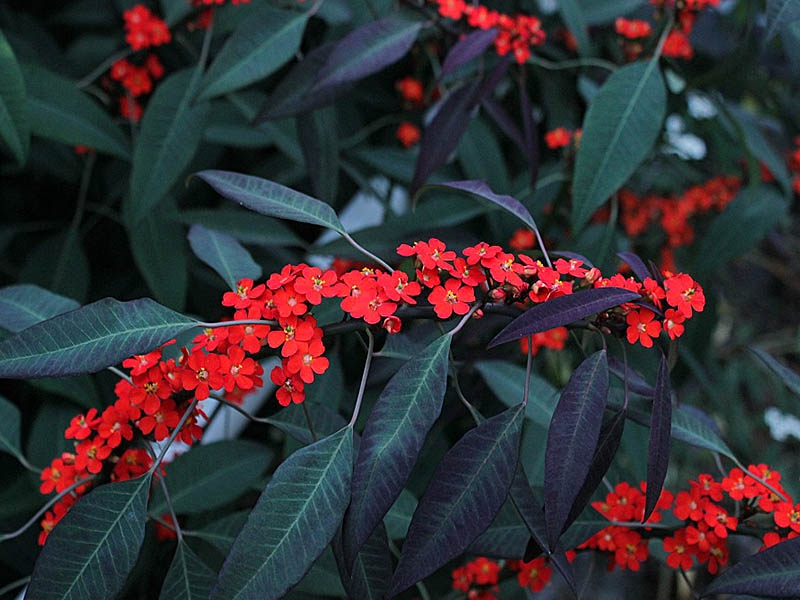
Euphorbia fulgens is a popular garden plant due to its attractive appearance and relatively easy care. The following is information regarding this plant's growth characteristics, propagation methods, cultivation methods, garden uses, major pests and diseases, and control methods. - Growth Characteristics: - Euphorbia fulgens is a shrub with succulent stems and uniquely shaped leaves. - It thrives in warm climates, although growth may slow down in cool temperatures. - It likes sunlight, but grows better in partial shade than in direct sunlight, and prefers well-draining soil. - Propagation Methods: - It is primarily propagated by cuttings. Use healthy stems cut in spring or early summer. - Dry the cut section for about a day to remove moisture, then plant it in well-draining soil. - Propagation by seed is also possible, but this method takes longer. 3. Cultivation Method: - It can be grown both indoors and outdoors; indoors, it is best cared for by planting it in a pot. - It is best to water only after the soil has completely dried out, and overwatering should be avoided. - Fertilizing in the spring and summer using slow-release fertilizers can promote growth. - Use in the Garden: - It is suitable for planting in the garden as an ornamental plant or growing in pots on terraces and balconies. - It can add a focal point to the garden through harmonious placement with other plants. - Major Pests and Diseases & Control Methods: - Be careful of root rot, which can occur due to overwatering, with Euphorbia fulgens. - It may be attacked by aphids or scale insects; to prevent this, periodic leaf washing and proper ventilation are important. - If problems arise, you can manage them using plant-specific insecticides. Please refer to the information above to grow healthy Euphorbia fulgens and add beauty to your garden.
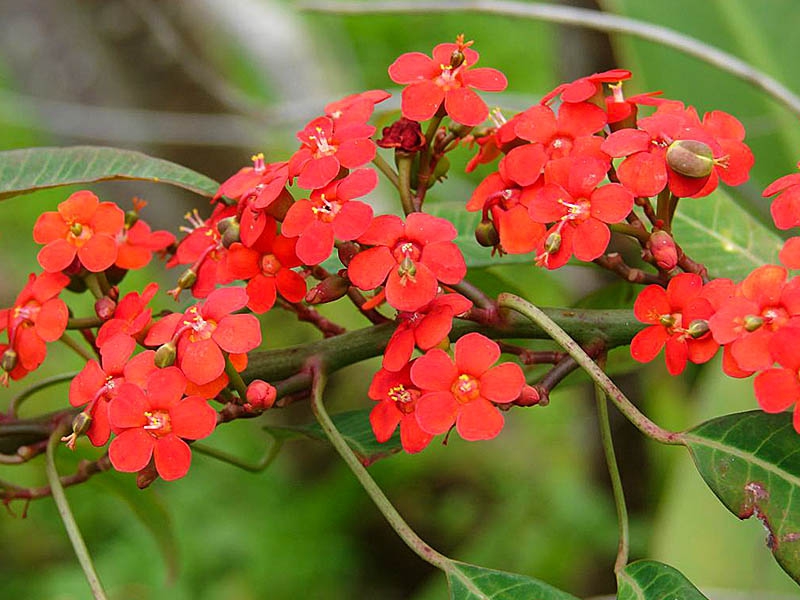
Plant Family
Euphorbia
Height
1.5m
Colors
red
Bloom Period
September to December
Water Needs
Bad
Exposure
semi-shaded area
Freezing Resistance
-2°C
Euphorbia Hamata
Euphorbia hamata
Euphorbia Fruticosa
Euphorbia fruticosa