English
한국어
English
Español
中文
हिंदी
Home
News
Community
Dictionary
English
한국어
English
Español
中文
हिंदी
View list
Erinaceum cactus
Gymnocalycium erinaceum
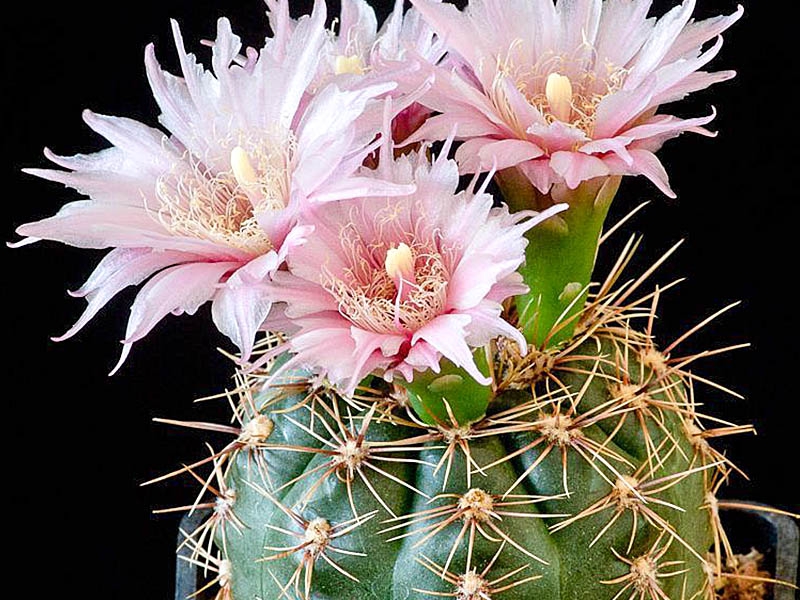
The cactus Gymnocalycium erinaceum is native to South America and is characterized by its small size and spherical body. This cactus thrives in sandy, well-drained soil and grows healthiest under bright, indirect light. Additionally, while it should be watered about once a week during the summer, it is best to avoid watering it almost entirely during the winter dormancy period. Propagation is primarily done through seeds, and germination is most successful when the temperature is appropriate (20–25°C). To propagate, collect seeds from a mature cactus, sow them in potting soil, and cover them very thinly. Maintain adequate moisture until germination, and provide adequate sunlight after germination. For cultivation, it is recommended to use a well-ventilated pot and well-draining soil specifically designed for cacti. Furthermore, it is advisable to install a shade cover during the summer to block strong sunlight, and it is recommended to apply an appropriate amount of fertilizer about once every two months during the growing season in spring and summer. In gardens, it is widely used as a decorative plant indoors, on balconies, or in small flowerbeds. Due to its small size and ease of care, it is also suitable for terrariums or succulent gardens. Major pests include cotton woolly aphids and aphids; if they appear, it is effective to detect them early and wipe them off with cotton soaked in liquid soap or alcohol. Additionally, if fungal diseases occur, it is recommended to improve drainage conditions and use fungicides if necessary. As a preventive measure, it is important to avoid overwatering and maintain proper ventilation.
Plant Family
Cactus and
Height
5~15cm
Spread
5.5cm
Colors
white, pink
Bloom Period
March to August
Water Needs
Bad
Exposure
semi-shaded area
Freezing Resistance
-10°C
Eurypleurum cactus
Gymnocalycium eurypleurum
Castellano cactus
Gymnocalycium castellanosii