English
한국어
English
Español
中文
हिंदी
Home
News
Community
Dictionary
English
한국어
English
Español
中文
हिंदी
View list
Daylily 'French Tudor'
Hemerocallis hybrid
'French Tudor'
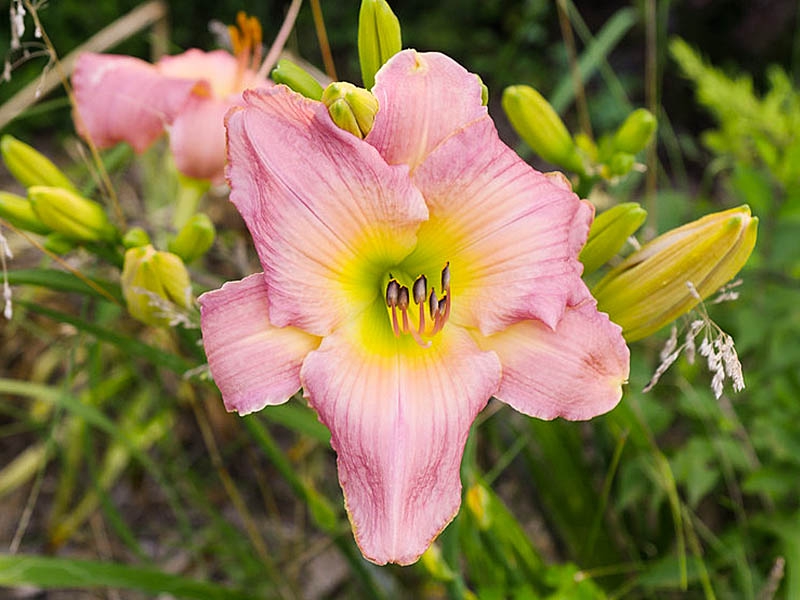
Growth Characteristics of Hemerocallis 'French Tudor' The Hemerocallis hybrid 'French Tudor' is a perennial that primarily blooms beautifully during the summer. This variety is renowned for its long flowering period and attractive flowers in various colors. It grows to a height of approximately 60–90 cm and features broad leaves. It thrives in environments with plenty of sunlight but can also grow in partial shade. Propagation Methods Hemerocallis is primarily propagated by root division. Root division is usually performed in spring or autumn, where new individuals are separated from a healthy mother plant and planted. When dividing, the roots must be fully mature, and each divided root must have sufficient roots and stems. Cultivation Methods - Soil and Location: It grows well in well-drained soil, and a sunny location is suitable. Slightly acidic to neutral soil pH (6.0–7.0) is appropriate. 2. Watering: Although it is relatively drought-tolerant, it is recommended to water thoroughly during the flowering period. Be careful to prevent the soil from becoming too dry. - Fertilization: Use slow-release fertilizers to provide nutrients during the growing and flowering periods. Be cautious, as excessive fertilizer use can actually hinder growth. - Pruning: Removing dead leaves or flowers to maintain a neat appearance promotes healthier growth. Uses in the Garden Due to its beautiful flowers and rapid growth, 'French Tudor' is well-suited for various locations such as gardens, border areas, and flower beds. When planted in mass, it creates an even more spectacular effect. It offers visual pleasure as it can bloom with flowers of various colors all at once. Important Pests and Diseases & Control Methods - Diseases: Leaf blight, which primarily affects the leaves, may occur. It is important to remove diseased parts quickly, and in some cases, fungicides may be used preventively. - Pests: Pests such as aphids or moth larvae may appear. Aphids can be controlled through periodic water washing or the use of natural predators, while moth larvae can be removed from leaves early or organic pesticides can be used. Proper management prevents pests and diseases, and regular observation and measures can keep plants healthy.
Plant Family
Daylily family
Height
60~90cm
Spread
30~60cm
Colors
yellow, pink
Bloom Period
June~July
Water Needs
commonly
Exposure
Sunny
Freezing Resistance
-30°C
Daylily 'Primal Scream'
Hemerocallis hybrid
'Primal Scream'
Daylily 'Floor Plano'
Hemerocallis fulva
'Flore Pleno'