English
한국어
English
Español
中文
हिंदी
Home
News
Community
Dictionary
English
한국어
English
Español
中文
हिंदी
View list
Rose of Sharon
Hibiscus syriacus
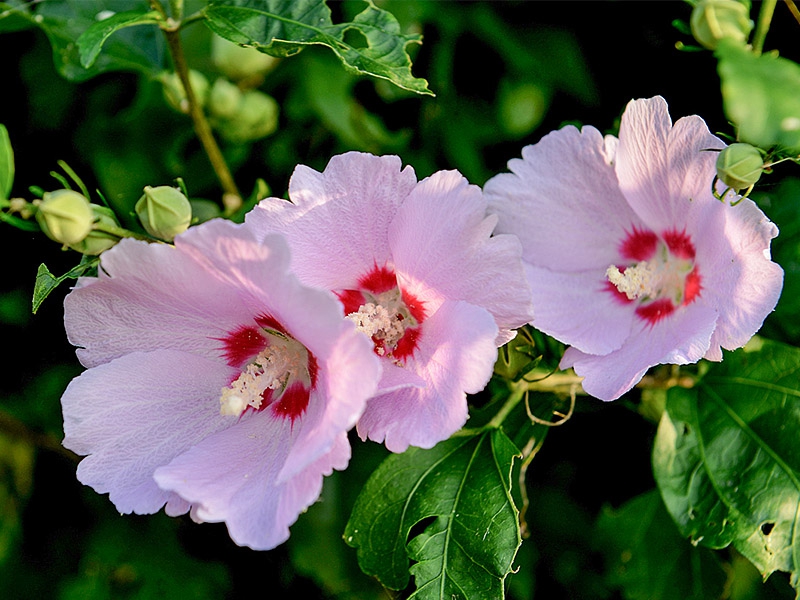
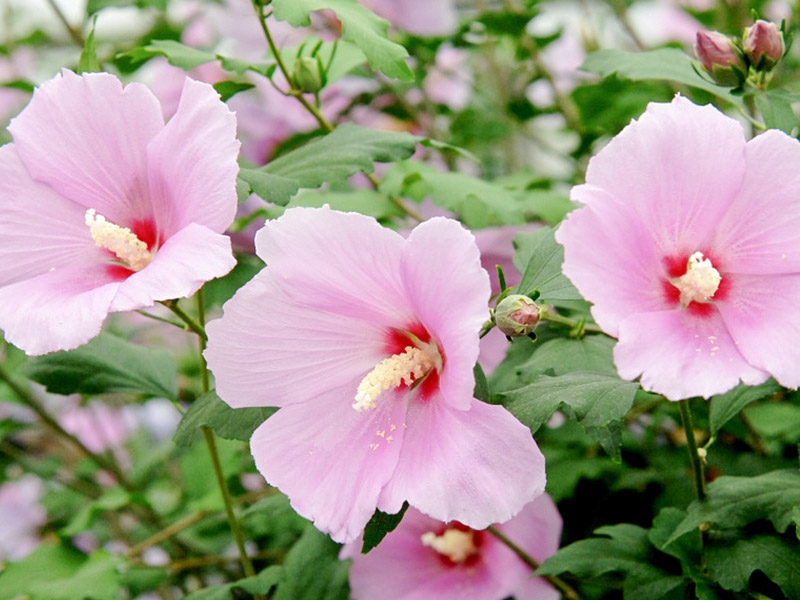
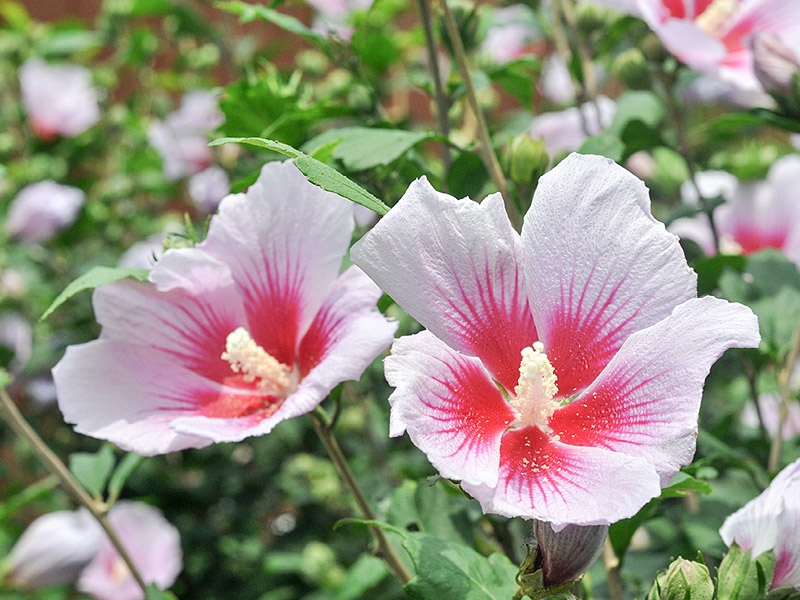
The Rose of Sharon (Hibiscus syriacus) is a shrub-like deciduous tree frequently seen in East Asia, including Korea, and is also the national flower of South Korea. The following describes the growth characteristics, propagation methods, cultivation methods, garden uses, and major pests and diseases and control methods of the Rose of Sharon. Growth Characteristics - Growing Environment: The Rose of Sharon thrives in sunny locations and prefers well-drained soil. It has strong cold and drought tolerance, allowing it to grow well in various environments. - Flowering Season: It blooms from summer to autumn; the flowers typically open in the morning and wilt in the evening. - Size: Mature trees usually grow to a height of about 2 to 4 meters, and the leaves are alternate and take the form of trifoliate leaves. Propagation Methods - Seed Propagation: Collect seeds when the fruit matures in autumn and sow them in early spring. - Cuttings: It can be propagated by cutting branches in spring or summer. 3. Grafting: Roses of Sharon can also be propagated through grafting, which is useful for maintaining superior varieties. Cultivation Methods - Planting: It is best to plant Roses of Sharon in spring or autumn. When planting, care must be taken to ensure the roots spread widely. - Watering: During dry periods, water thoroughly about once a week. - Fertilization: During the growing season, apply slow-release fertilizer in moderation to promote growth. Uses in Gardens Rose of Sharon is widely used as a boundary planting in gardens. It possesses high aesthetic value due to its diverse varieties and flower colors, and it is also suitable as a commemorative tree as it holds special traditional significance. Important Pests and Diseases and Control Methods - Diseases: Roses of Sharon may be susceptible to diseases such as powdery mildew and leaf blight. To prevent this, ensure good ventilation and use appropriate pesticides. - Pests: Pests such as aphids may appear; control them using soap solutions or chemical insecticides. 3. Prevention: Pests and diseases can be prevented through regular pruning and the removal of diseased branches. The Rose of Sharon boasts strong vitality and abundant blooms, providing a beautiful landscape in gardens and public spaces. With proper care, it can grow healthily for many years.
Plant Family
Malvaceae
Height
2~4m
Colors
White, pink, red
Bloom Period
July to October
Water Needs
commonly
Exposure
Sunny
Freezing Resistance
-15°C
Rose of Sharon 'Bluebird'
Hibiscus syriacus
'Blue Bird'
Coral Hibiscus
Hibiscus schizopetalus