English
한국어
English
Español
中文
हिंदी
Home
News
Community
Dictionary
English
한국어
English
Español
中文
हिंदी
View list
Hoodia husavensis nel
Hoodia husabensis
Nel
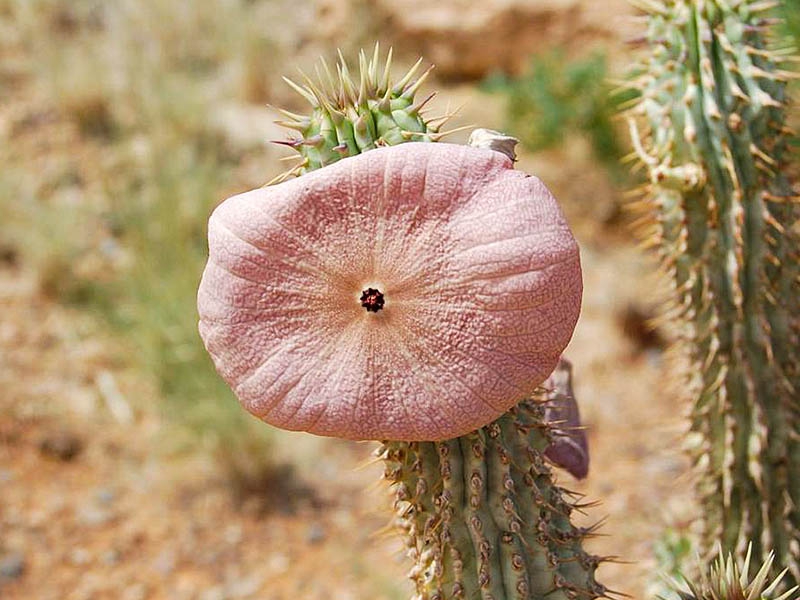
Hoodia husavensis is a succulent plant belonging to the genus Hoodia, native primarily to the desert regions of Namibia and South Africa. This plant adapts well to dry environments and is commercially known for its appetite-suppressing effects. However, it possesses unique characteristics that require caution. The following describes the growth characteristics, propagation methods, cultivation methods, garden uses, and major pests and diseases, as well as control methods, of Hoodia husavensis. Growth Characteristics - Environmental Conditions: Hoodia husavensis prefers dry climates and strong sunlight. It grows best in well-drained soil and has low water requirements. - Form: It grows as a small shrub with thick, fleshy stems and protruding tubercles. - Growth Rate: Its growth rate is relatively slow, and it may take several years to reach maturity. Propagation Methods - Seed Propagation: It can be propagated by seeds, which germinate well in dry and warm conditions. Spring or early summer is the appropriate time for planting. - Cuttings: It can be propagated by cutting stems. Allow the cut stems to dry for a few days to harden the cut surface before planting. Cultivation Methods - Soil: Use potting mix specifically designed for succulents or a well-draining mixture rich in sand and gravel. - Watering: Avoid excessive moisture; it is best to water only after the soil has completely dried. - Sunlight: It requires at least 6 hours of direct sunlight per day. Garden Uses Thanks to its unique form, Hoodia fusabensis is used as an exotic focal point in the garden. Its distinctive shape and texture make it useful for creating a desert-themed garden. Important Pests and Control Methods - Diseases: Root rot caused by overwatering is a major issue. To prevent this, water sparingly and use well-draining soil. - Pests: It is generally resistant to pests and diseases, but spider mites and scale insects may occur. For spider mites, remove them by lightly misting the entire plant with water, and for scale insects, remove them directly using a cotton swab soaked in alcohol. - Control: It is recommended to manage the plant using natural methods rather than using insecticides. Growing it in a well-ventilated location rather than a confined space is particularly helpful. When cultivating Hoodia fusabensis, you must pay attention to environmental conditions and water management. For this plant, it is more important to help it adapt to its environment rather than providing constant care.
Plant Family
Asclepiadaceae
Height
70cm
Spread
4cm
Colors
purple
Bloom Period
August~September
Water Needs
Bad
Exposure
Sunny
Freezing Resistance
-5°C
Hudia Macranta de Trère
Hoodia macrantha
Dtr
Resceoiides
Hookeria leskeoides