English
한국어
English
Español
中文
हिंदी
Home
News
Community
Dictionary
English
한국어
English
Español
中文
हिंदी
View list
Sedum
Hylotelephium erythrostictum
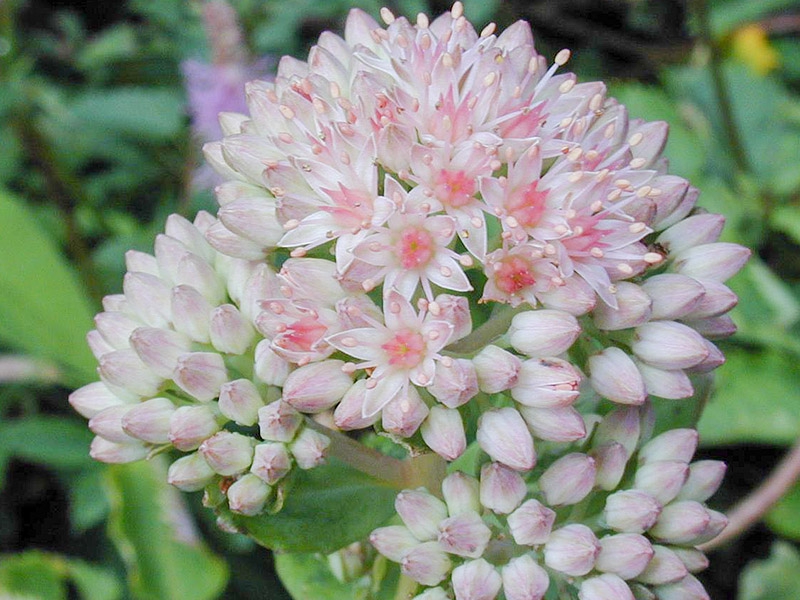
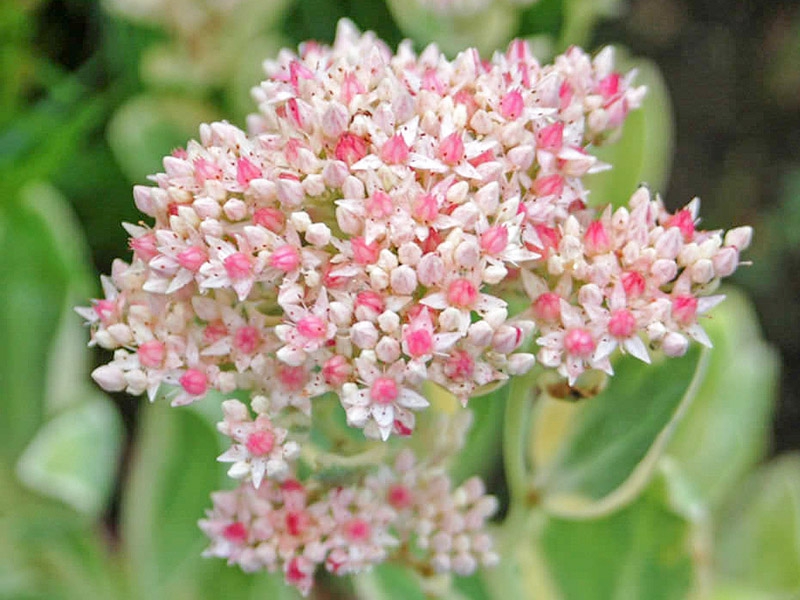
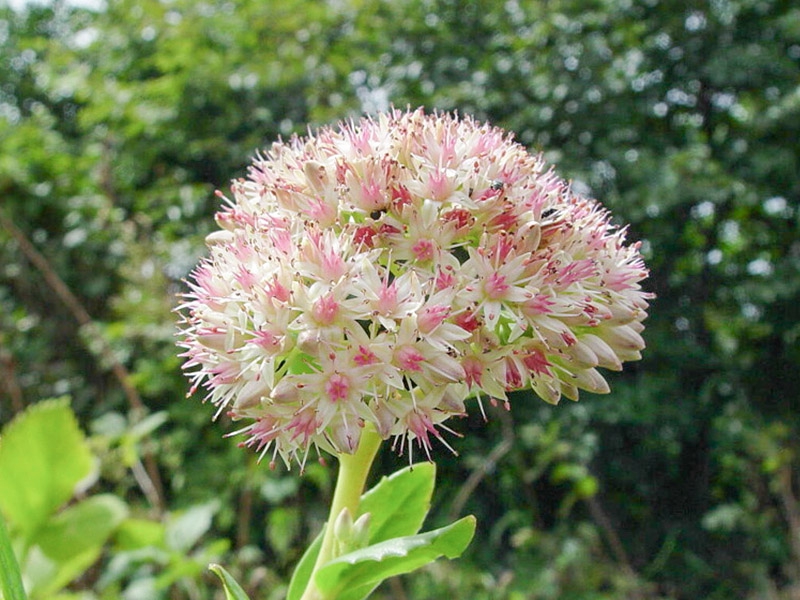
Hylotelephium erythrostictum Growth Characteristics Hylotelephium erythrostictum is a perennial herbaceous plant that grows to a height of approximately 30 to 60 cm. The leaves are thick and fleshy, with rounded tips and smooth margins. Small pink or white flowers bloom from summer to autumn, forming umbel inflorescences. Propagation Methods It is primarily propagated by cuttings and division. For cuttings, healthy stems are cut in spring or autumn and planted in well-draining potting soil, such as sand or perlite, to encourage rooting. Division is mainly performed in spring; the part with developed roots is cut off and transplanted. Cultivation Methods It thrives in sunny locations and prefers well-draining soil. Care should be taken to avoid overwatering; water should be given only after the soil has dried sufficiently. In winter, reduce watering to induce a dormant period. During the spring and summer growing seasons, apply liquid fertilizer every two weeks. Uses in the GardenSedum erythrosticum can be utilized in various ways in the garden. It is primarily planted as a border plant or for decoration in rock gardens, and can also be used as a ground cover. Additionally, because it thrives in dry environments, it is suitable for gardens where watering is convenient. Important Pests and Control MethodsSedum erythrosticum is relatively resistant to diseases, but root rot can occur due to excessive moisture. To prevent this, pay attention to drainage and regulate watering appropriately. Aphids may occur as pests; frequently inspect the leaves to remove them at the early stages of infestation, or control them using soapy water or safe insecticides.
Plant Family
Stonecrop family
Height
30~90cm
Colors
white, pink
Bloom Period
August to October
Water Needs
commonly
Exposure
Sunny
Freezing Resistance
-30°C
Large pheasant's-eye
Hylotelephium spectabile
Island pheasant's-eye
Hylotelephium viridescens