English
한국어
English
Español
中文
हिंदी
Home
News
Community
Dictionary
English
한국어
English
Español
中文
हिंदी
View list
Siberian iris 'Chartruse Bounty'
Iris sibirica
'Chartreuse Bounty'
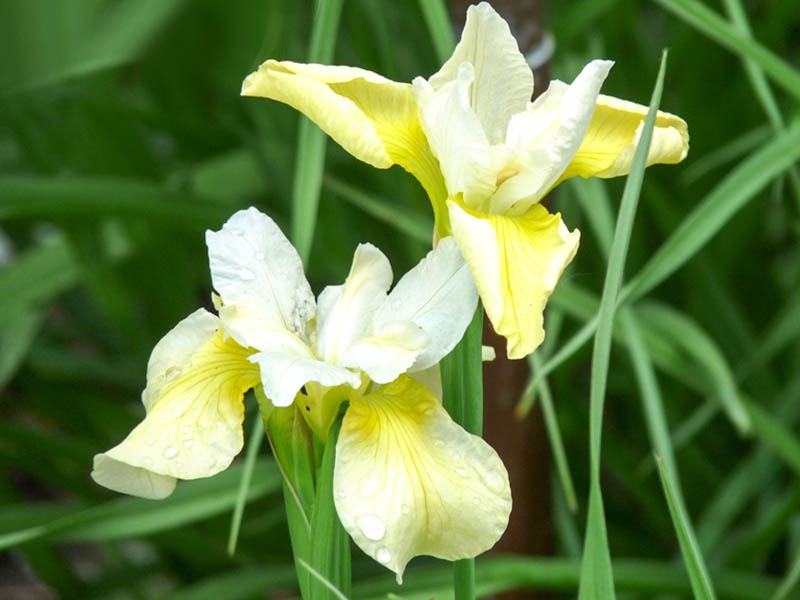
The Siberian Iris 'Chartreuse Bounty' (Iris sibirica 'Chartreuse Bounty') is a variety featuring unique light green flowers that provides a spectacular focal point in the garden. The following is information regarding this variety's growth characteristics, propagation methods, cultivation techniques, garden uses, and major pests and diseases and control methods. Growth Characteristics - Environmental Conditions: Siberian irises generally thrive in humid environments and show optimal growth in locations with ample sunlight. They can also grow in partial shade. - Soil: They prefer fertile, well-drained soil. They grow particularly well in soil rich in organic matter. - Growth Habits: They grow via rhizomes, and flowers usually bloom in early summer. Propagation Methods - Division: This is the most common method of propagation; new plants can be obtained by dividing the roots in early spring or autumn. They establish well if planted immediately after division. - Seeds: Propagation by seeds is also possible, but this is time-consuming and it is difficult to guarantee the variety's characteristics. Cultivation Method - Planting: Plant the roots about 5 cm deep and space them 30 to 40 cm apart. Planting in a well-drained location helps prevent root rot. - Watering: Provide ample water during the initial growth period; once fully grown, watering once a week is sufficient. - Fertilizer: Applying slow-release fertilizer in the spring is beneficial. Garden Uses - Siberian irises are excellent for ornamental purposes due to their beautiful flowers and are frequently used along flowerbed edges, near water, or in wetland gardens. - Planting them in harmony with other perennial plants can create a stunning landscape. Major Pests and Diseases & Control Methods - Diseases: Major diseases include root rot and fungal diseases affecting the leaves. Ensure good drainage and avoid overcrowding. - Pests: Siberian irises are relatively resistant to pests, but aphids may occur. Using pest control soap or acaricides is effective. - General Control Methods: To prevent pests and diseases, periodically remove weeds around the plant, and inspect the leaves and stems to take prompt action if any problems arise. The information above will help you grow the Siberian Iris 'Chartruse Bounty' healthily and make good use of it in your garden.
Plant Family
Iris family
Height
90~120cm
Spread
40~45cm
Colors
yellow
Bloom Period
May~June
Water Needs
commonly
Exposure
Sunny
Freezing Resistance
-30°C
Siberian iris 'Claire's Cup'
Iris sibirica
'Clared Cup'
Siberian iris 'Butter and Sugar'
Iris sibirica
'Butter And Sugar'