English
한국어
English
Español
中文
हिंदी
Home
News
Community
Dictionary
English
한국어
English
Español
中文
हिंदी
View list
Lavender 'Polgate'
Lavandula angustifolia
'Folgate'
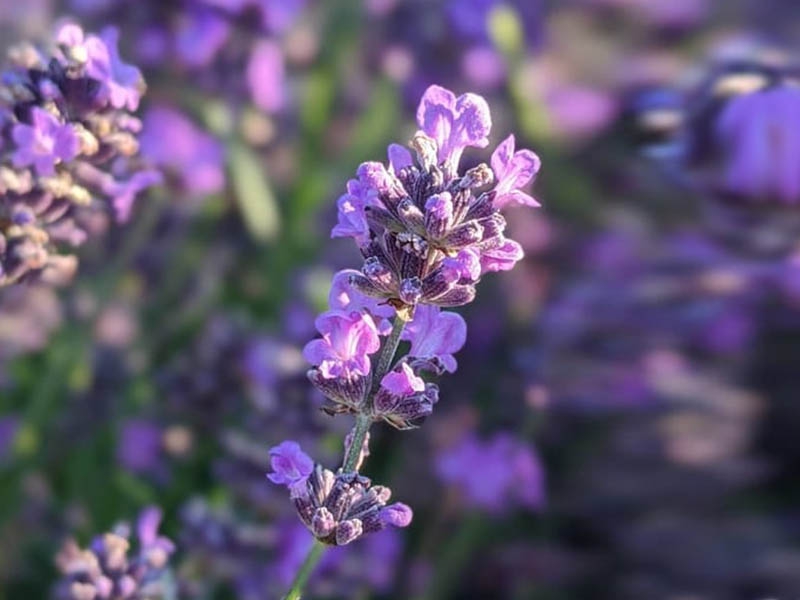
Lavender 'Folgate' (Lavandula angustifolia 'Folgate') is a variety well-known for its beautiful flowers and fragrance. The following describes the growth characteristics, propagation methods, cultivation methods, garden uses, and major pests and diseases, as well as control methods. Growth Characteristics 'Folgate' is relatively cold-tolerant and grows well in the Korean climate. The leaves are silvery-gray, and the flowers are deep purple, blooming during the summer. It generally grows to a height of about 40–60 cm, with flowers blooming densely at the tips of the stems. Propagation Methods It is primarily propagated by cuttings. In spring or early summer, cut healthy new shoots about 10 cm in length and plant them in well-draining soil to allow them to take root. Propagation by seeds is also possible, but cuttings are more common due to the low germination rate. Cultivation Methods Lavender prefers sunny locations and grows best in well-drained soil. Water regularly, but be careful not to overwater. During the winter, avoid overwatering, and if necessary, water occasionally when the soil surface is dry. Fertilizing once in the spring is appropriate. Uses in the Garden Due to its beautiful appearance and fragrance, Folgate Lavender is excellent for planting along garden borders or the edges of walkways. It attracts bees and butterflies, making it suitable for creating ecological gardens. Important Pests and Diseases & Control Methods - Diseases: The main disease is root rot caused by fungi; preventing overwatering is crucial for prevention. If disease occurs, remove the infected parts and use a fungicide if necessary. - Pests: Aphids and spider mites can cause problems. Control them by washing them off with water in the early stages, or by using an appropriate insecticide in severe cases. Folgate Lavender is a relatively easy-to-care-for plant that can be cultivated for several years; it can be kept healthy through proper care and pest control methods.
Plant Family
Lamiaceae
Height
60~90cm
Spread
60~90cm
Colors
purple
Bloom Period
April to June
Water Needs
commonly
Exposure
Sunny
Freezing Resistance
-15°C
Lavender 'Hidcoat'
Lavandula angustifolia
'Hidcote'
Lavender 'Betis Blue'
Lavandula angustifolia
'Betty's Blue'