English
한국어
English
Español
中文
हिंदी
Home
News
Community
Dictionary
English
한국어
English
Español
中文
हिंदी
View list
Nari Philadelphicum
Lilium philadelphicum
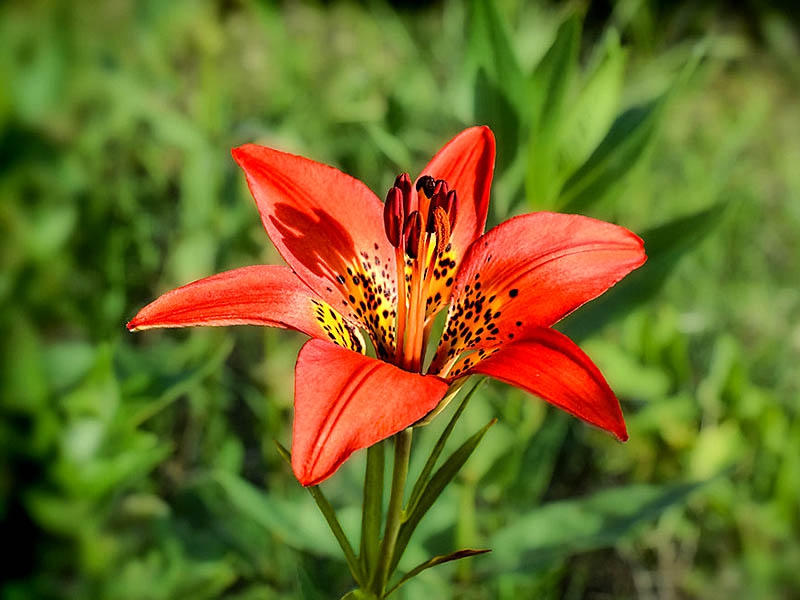
Growth Characteristics Lilium philadelphicum is a plant of the Liliaceae family native primarily to North America, typically growing to about 1 meter in height. Its roots are shallow and spread widely, while its leaves are narrow, long, slender, and smooth. The flowers range in color from red to orange, blooming in the summer, and feature small brown spots in the center of the petals. Propagation Methods It is primarily propagated by seeds and bulbs. It is recommended to harvest seeds in the autumn after they mature and sow them in the spring following the cold winter. For propagation using bulbs, detach a scale-like piece from a mature root and plant it separately. Cultivation Methods - Soil: It prefers well-drained soil, and slightly acidic or neutral pH soil is suitable. - Sunlight: It thrives in full sun or partial shade. - Watering: Maintain adequate moisture during the growing season, but avoid frequent watering. 4. Fertilization: Provide nutrients using slow-release fertilizer in the spring. Uses in the GardenDue to its beautiful flowers, the Philadelphimum lily is used as an important ornamental plant in the garden. In particular, its vibrant colors make it suitable for harmonizing with other plants, and it can be easily grown with just basic care. Important Pests and Control Methods - Red Mealworm: This pest feeds on leaves and flowers; it is controlled using pyrethroid insecticides. - Lily Phantom Blight: This disease causes leaves and stems to turn brown and dry out; it is controlled using systemic fungicides. - Powdery Mildew: This causes a white, powdery substance to appear on the leaves; sulfur-based fungicides are used for early control. Through these methods, you can grow and manage the Philadelphimum lily healthily.
Plant Family
Lily family
Height
30~90cm
Spread
22~30cm
Colors
orange
Bloom Period
July~August
Water Needs
commonly
Exposure
Sunny
Freezing Resistance
-30°C
Dangnari
Lilium brownii
Michigan Nari Mikiganense
Lilium michiganense