English
한국어
English
Español
中文
हिंदी
Home
News
Community
Dictionary
English
한국어
English
Español
中文
हिंदी
View list
Oak mistletoe
Taxillus yadoriki
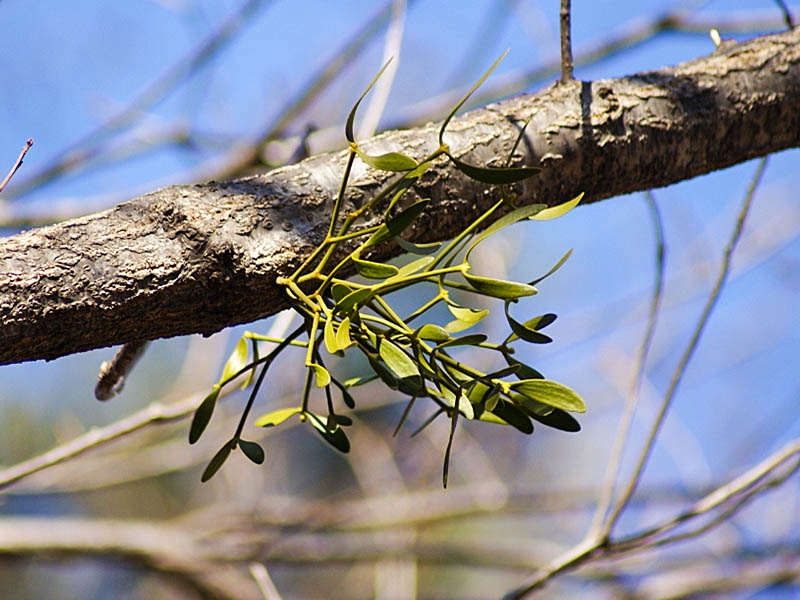
Growth Characteristics, Propagation Methods, and Management of Oak Mistletoe (Taxillus yadoriki) - Growth Characteristics: - Oak mistletoe is a semi-parasitic plant that grows by parasitizing oak trees. - The leaves are thick, ovate, glossy, and have smooth margins. - Yellow flowers bloom from spring to early summer, and red berries form in winter. - Propagation Methods: - It primarily reproduces through seeds. - When birds eat the seeds inside the berries, they are dispersed to other trees along with their droppings. - The seeds attach to the host's branches, germinate, take root, and absorb nutrients. - Cultivation Methods: - While it is difficult to cultivate in a typical garden, it can be grown to a limited extent under manageable conditions. - It requires oak trees or other suitable trees for parasitism, and the environment must be sunny and well-drained. 4. Use in the Garden: - Oak mistletoe can be used as an ornamental plant in the garden due to its unique appearance and red berries in winter. - It should be planted considering the tree it will host and an appropriate location. - Major Pests and Control Methods: - It is not significantly affected by pests, but the health of the host tree can have an impact. - Since natural control is difficult due to the nature of parasitic plants, it is important to consistently manage the health of the host tree. - Prevention can be achieved by pruning diseased branches or parts of the host tree as needed. Although oak mistletoe requires some care due to its unique ecological characteristics, it can add a distinctive charm to the garden when utilized properly.
Plant Family
Mistletoe family
Height
40~60cm
Spread
1m
Colors
purple, brown
Bloom Period
September to December
Water Needs
commonly
Exposure
Sunny
Freezing Resistance
-10°C
Lopoporadiphusa Difusa
Lophophora diffusa
Mistletoe
Loranthus tanakae