English
한국어
English
Español
中文
हिंदी
Home
News
Community
Dictionary
English
한국어
English
Español
中文
हिंदी
View list
alfalfa
Medicago sativa
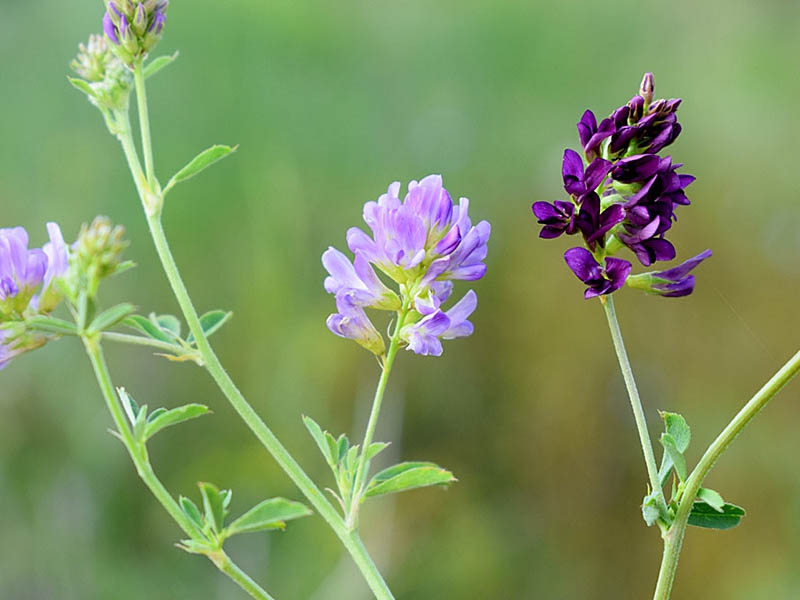
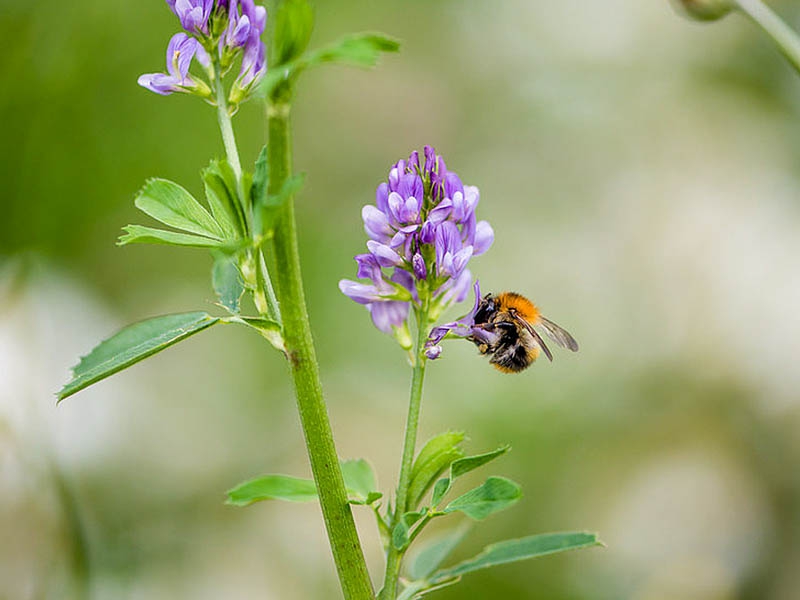
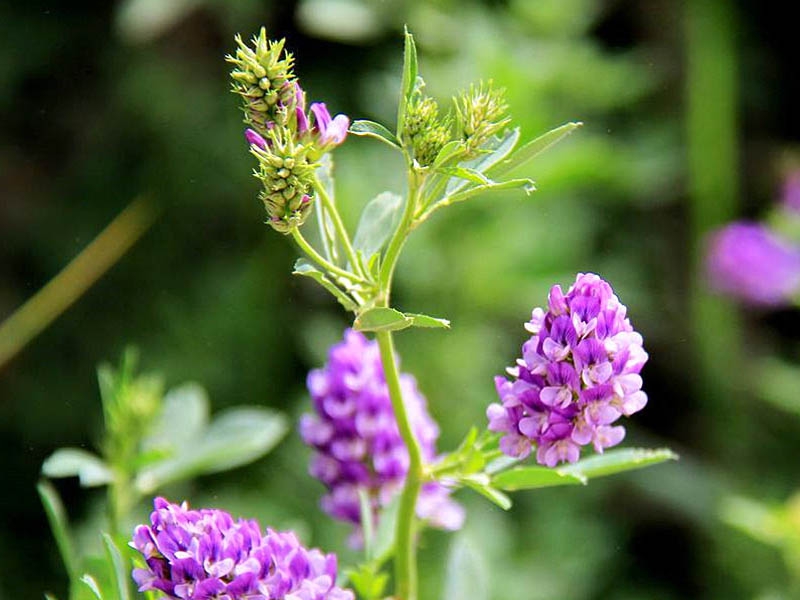
Medicago sativa, commonly known as alfalfa, possesses the following characteristics: - Growth Characteristics: - It is a perennial herbaceous plant with deep, strong roots that make it resistant to drought. - It typically grows to a height of 60–90 cm, and its leaves consist of three leaflets. - It produces purple flowers, blooming from summer through early autumn. - Propagation Methods: - It is primarily propagated by seeds. - Early spring or autumn is the optimal time for sowing, and germination rates are high when the temperature is between 18–24°C. - Cultivation Methods: - It thrives in sunny locations and requires well-drained soil. - Before planting, deeply till the soil and improve soil quality by adding organic matter as needed. - After sowing, maintain adequate moisture and create an environment with good drainage. 4. Use in Gardens: - It is widely used as a fodder crop and is highly nutritious as animal feed. - It is also used as a soil improvement plant; its excellent nitrogen fixation ability contributes to increasing soil fertility. - Major Pests and Control Methods: - Soybean Aphids: Can be controlled by washing with soapy water or using insecticides. - Root Rot: Grow in well-drained soil and avoid excessive watering. - Fungal Diseases: Maintain adequate ventilation and use antibiotics if necessary for control. Alfalfa sativa can grow healthily under proper care and can be utilized for various purposes. Good results can be achieved by paying attention to pest management and creating a suitable growing environment.
Plant Family
legumes
Height
20~80cm
Colors
purple
Bloom Period
July~August
Water Needs
commonly
Exposure
Sunny
Freezing Resistance
-15°C
Himalayan blue poppy
Meconopsis betonicifolia
garage
Medicago polymorpha