English
한국어
English
Español
中文
हिंदी
Home
News
Community
Dictionary
English
한국어
English
Español
中文
हिंदी
View list
Virginia sedge
Mertensia virginica
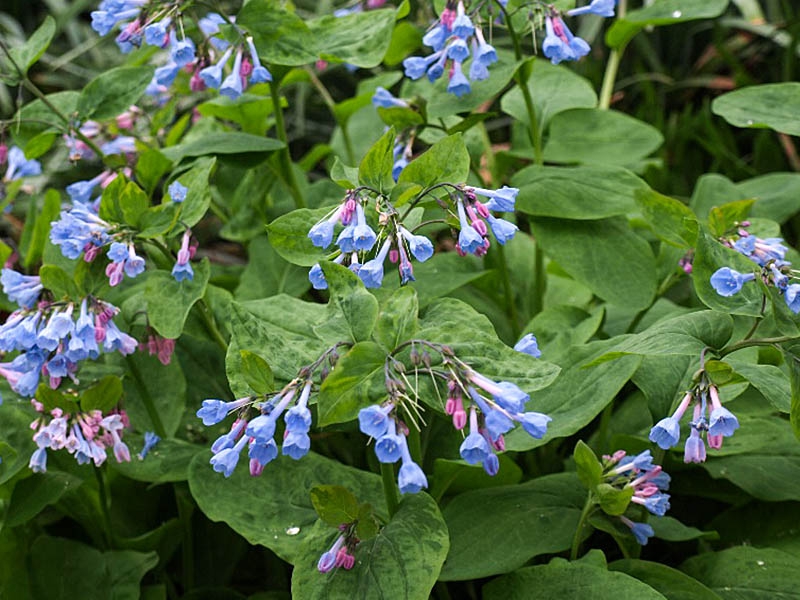
Growth Characteristics of Mertensia virginica Mertensia virginica is a perennial plant that primarily grows in moist forests, riverbanks, and gravel beds beneath wetlands. It is famous for blooming with beautiful bluish-purple or light blue flowers in the spring. This plant grows to a height of approximately 30–60 cm; after the flowers fade, the leaves grow profusely until they wither and disappear in the summer. Propagation Methods Mertensia virginica is mainly propagated by seeds and root division. Seeds can be collected in the autumn and sown immediately, or germinated in the spring after cold treatment. Root division is best done in early spring or early autumn; simply divide the roots carefully and plant them in a new location. Cultivation Methods This plant thrives in partial shade and prefers well-drained soil with moderate moisture. It is best to keep the location from receiving excessive sunlight, and care must be taken to prevent it from drying out during the summer. Providing compost or fertilizer in the fall or winter will allow the plant to grow healthier the following year. Uses in the GardenEchinochloa virginica is suitable for shady garden spaces and can create a natural atmosphere, especially when planted alongside other wildflowers. Because it blooms with showy flowers in the spring, it is excellent for planting along the front border of flower beds, adding vibrancy to early spring. Important Pests and Control MethodsEchinochloa virginica is fundamentally resistant to pests and diseases, but leaf rust can rarely occur. To prevent this, it is important to plant it in a well-ventilated location and in well-draining soil. Pests may include snails and aphids; natural control methods include using snail attractants, while aphids can be controlled using appropriate eco-friendly insecticides.
Plant Family
Dental clinic
Height
30~60cm
Spread
30~60cm
Colors
blue
Bloom Period
March to April
Water Needs
commonly
Exposure
semi-shaded area
Freezing Resistance
-30°C
Sea sedge siliata
Mertensia ciliata
sea snails
Mertensia maritima
subsp.
asiatica