English
한국어
English
Español
中文
हिंदी
Home
News
Community
Dictionary
English
한국어
English
Español
中文
हिंदी
View list
Molinia 'Edith Dujuice'
Molinia caerulea
subsp.
caerulea
'Edith Dudzus'
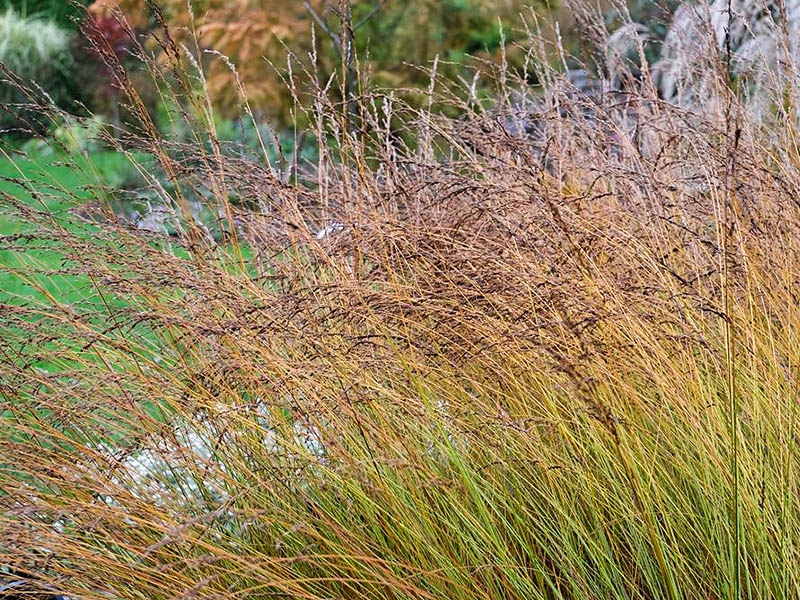
Molinia 'Edith Dudzus' (Molinia caerulea subsp. caerulea 'Edith Dudzus') is an attractive ornamental herb suitable for various gardens. Below is a description of this variety's growth characteristics, propagation methods, cultivation methods, garden uses, and major pests and control methods. Growth Characteristics - Form: As a perennial herb, it has an elegant arched shape and slender leaves. - Size: It grows to a height of approximately 60–90 cm upon maturity, and beautiful flower clusters form in summer and autumn. - Light: It prefers a location with partial shade and plenty of sunlight. - Soil: It thrives in well-drained soil and is best kept slightly moist. - Cold Hardiness: It is generally resistant to cold and can survive the winter in most climates. Propagation Methods - Seeds: It can be propagated by sowing seeds, but this process takes a long time. - Division: It is effective to propagate by dividing mature plants in spring or autumn. Cultivation Method - Planting: Plant at intervals of approximately 30–45 cm. - Watering: Water thoroughly until the roots establish themselves after planting; after that, regular watering is sufficient. - Fertilization: It is recommended to apply general grass fertilizer once in the spring. - Pruning: Pruning the above-ground parts before winter arrives promotes growth for the following year. Uses in the Garden - Ornamental: It fits well with natural garden designs and can be used for decorative purposes. - Border Plant: It is used to define spaces by planting in boundary areas or borders. - Cluster Formation: Planting multiple plants together to form a cluster can create an even more spectacular landscape. Important Pests and Control Methods - Diseases: Generally, there are no specific diseases, but care must be taken to prevent root rot caused by overwatering. - Pests: While there are usually no problematic pests, aphids may occur. In this case, control can be achieved using soapy water or appropriate pesticides. - Control: If you prefer natural control, you may consider using eco-friendly pesticides or natural enemy insects. Considering these characteristics and methods, ‘Edith Dujus’ will be an excellent choice for enhancing the charm of your garden.
Plant Family
Poaceae
Height
75cm
Spread
50cm
Colors
green
Bloom Period
August to November
Water Needs
commonly
Exposure
Sunny
Freezing Resistance
-25°C
Molinia 'Hydebraut'
Molinia caerulea
subsp.
caerulea
'Heidebraut'
Molinia 'Windspill'
Molinia caerulea
subsp.
arundinacea
'Windspiel'