English
한국어
English
Español
中文
हिंदी
Home
News
Community
Dictionary
English
한국어
English
Español
中文
हिंदी
View list
Noni
Morinda citrifolia
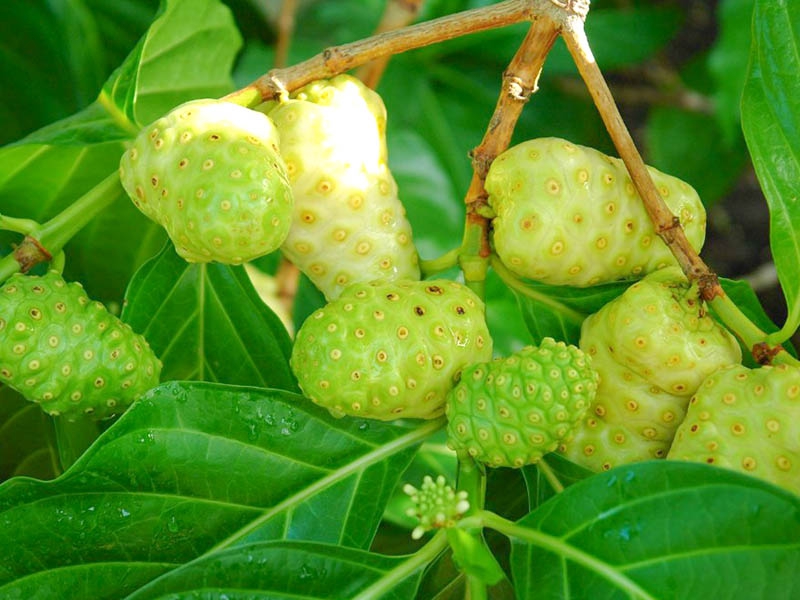
Noni citrifolia is a plant that thrives in tropical and subtropical regions and exhibits relatively strong vitality in diverse environments. The following is information regarding Noni’s growth characteristics, propagation methods, cultivation methods, garden uses, and major pests and diseases and control methods. Growth Characteristics - Climate: Noni prefers a warm and humid climate and grows well at temperatures above 15°C. - Soil: It prefers well-drained soil and grows well in acidic to slightly acidic soil (pH 4.5–7.5). - Sunlight: It requires plenty of sunlight, needing at least 6 hours of direct sunlight per day. Propagation Methods - Seed Propagation: It can be propagated using seeds. Collect seeds from mature fruits, wash them thoroughly, and then plant them. - Cuttings: Propagation is also possible by cutting branches. Cultivation Methods - Planting: Plant seeds or seedlings at a depth of about 2–3 cm and water thoroughly to encourage root development. - Watering: Water frequently during the initial stages, but mature plants can tolerate some degree of dryness. - Fertilizer: It is recommended to apply fertilizer containing appropriate amounts of nitrogen, phosphorus, and potassium during the growing season. Uses in the Garden - Landscaping: Noni is a plant that can create a tropical atmosphere and can be utilized in parts of gardens or arboretums. - Other Uses: The fruit is used as a health supplement, while the leaves and roots are used as traditional medicinal ingredients. Major Pests and Diseases & Control Methods - Pests and Diseases: Noni generally possesses strong resistance, but diseases such as root rot may occur due to excessive moisture. - Control Methods: Avoid excessive moisture through proper drainage and ventilation. If disease occurs, it is effective to remove the affected parts and apply fungicides. If you consider the above points when cultivating noni, you will be able to obtain healthier and better-grown noni.
Plant Family
Rubiaceae
Height
3∼12m
Colors
white
Bloom Period
June to November
Water Needs
commonly
Exposure
semi-shaded area
Freezing Resistance
-5°C
Morella California
Morella californica
wild mulberry tree
Morus bombycis