English
한국어
English
Español
中文
हिंदी
Home
News
Community
Dictionary
English
한국어
English
Español
中文
हिंदी
View list
Daffodil 'Professor Einstein'
Narcissus pseudonarcissus
'Professor Einstein'
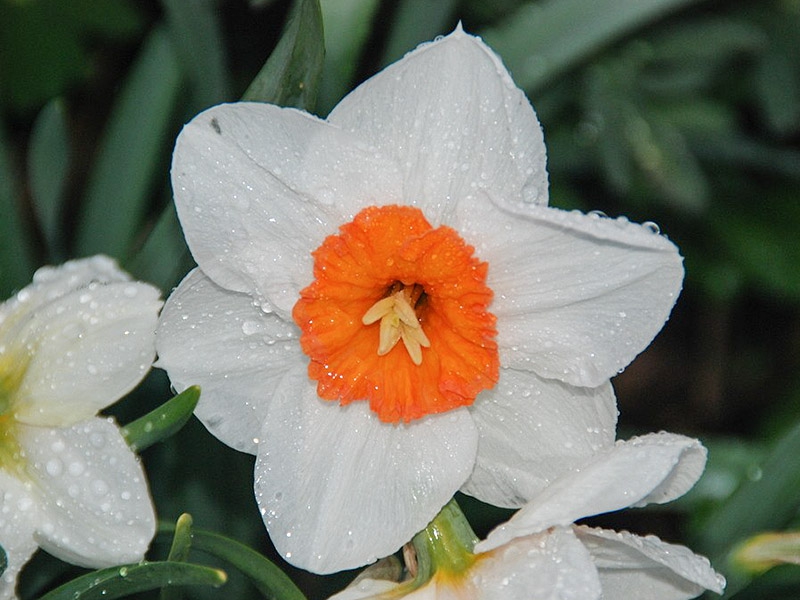
The daffodil 'Professor Einstein' (Narcissus pseudonarcissus 'Professor Einstein') is a variety loved by many gardeners for its unique shape and color. Below is information regarding this variety's growth characteristics, propagation methods, cultivation methods, garden uses, major pests and diseases, and control methods. Growth Characteristics 'Professor Einstein' generally prefers bright sunlight but can grow in partial shade. This plant thrives in well-drained soil and usually flourishes in neutral to slightly acidic or alkaline soil. The growing season is mainly spring; the leaves are sword-shaped, and the flowers feature intense orange cups and showy white petals. Propagation Methods Daffodils are primarily propagated by bulbs. Bulbs are usually planted between summer and autumn, and it is recommended to plant them about 10 to 15 cm deep. The best time to divide the bulbs is usually after the dormancy period in summer. Cultivation Methods - Planting: Plant bulbs 10–15 cm deep in the autumn. - Watering: Avoid overwatering and ensure good drainage to prevent root rot. - Fertilization: Provide nutrients by applying a small amount of slow-release fertilizer in early spring. - Care: Trim wilting leaves, but leave them for a while after the flowers have faded to allow the bulbs to receive nutrients through photosynthesis. Garden Uses Because it thrives in various climate conditions, it can be utilized in various garden styles. It can be used as a border area, the front row of flowerbeds, or as ground cover. It can also be combined with other spring flowers to create a spectacular spring landscape. Important Pests and Control Methods - Diseases: It may be susceptible to diseases such as Daffodil Mosaic Virus. It is recommended to remove infected plants. - Pests: Pests such as aphids may occur, and insecticides can be used to control them. - Control Methods: As a preventive measure, maintain well-drained soil and avoid overwatering. Additionally, periodically inspect the plant's condition to enable early detection and control. The 'Professor Einstein' daffodil is a plant that allows you to enjoy its beautiful flowers for a long time with proper care and attention.
Plant Family
Narcissus family
Height
30~60cm
Spread
5~7cm
Colors
Orange, white
Bloom Period
april
Water Needs
commonly
Exposure
Sunny
Freezing Resistance
-10°C
Daffodil 'Romance'
Narcissus pseudonarcissus
'Romance'
Daffodil 'Avalanche'
Narcissus tazetta
'Avalanche'