English
한국어
English
Español
中文
हिंदी
Home
News
Community
Dictionary
English
한국어
English
Español
中文
हिंदी
View list
Nepenthes maxima
Nepenthes maxima
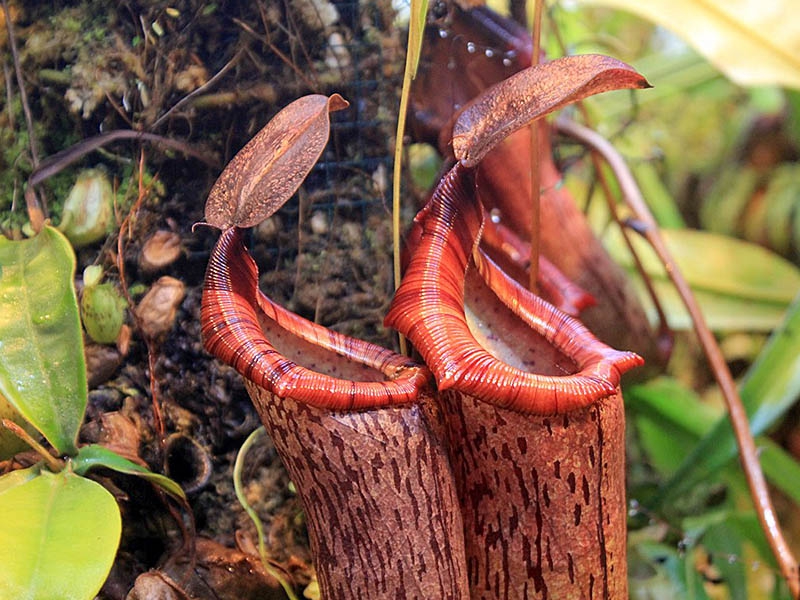
Nepenthes maxima is a representative tropical carnivorous plant characterized by its uniquely shaped pitchers. This plant grows naturally in tropical rainforests in regions such as Indonesia, New Guinea, and Malaysia, and prefers hot and humid environments. The following is information regarding the growth characteristics, propagation methods, cultivation methods, garden uses, and important pests and diseases and control methods of Nepenthes maxima. Growth Characteristics - Environment: It requires high humidity and sufficient indirect light. Direct sunlight should be avoided, and humidity should be maintained at 50–70% or higher. - Temperature: An ideal temperature is around 20–30°C during the day and 10–20°C at night. - Soil: A specialized potting mix containing well-draining peat or sphingon moss is suitable. Propagation Methods - Seeds: Seeds are collected from the pitchers of mature plants and germinated. High humidity and consistent light are required for germination. - Propagation by Cuttings: Cut a stem to a length of about 2 to 3 nodes and propagate it to induce rooting. Use a cutting that includes a leaf. Cultivation Methods - Watering: Keep the soil consistently moist to prevent it from drying out completely. It is recommended to use rainwater or distilled water instead of tap water. - Fertilizer: Generally, it does not require fertilizer, but if growth is sluggish, a low-concentration fertilizer may be used occasionally. - Ventilation: Ensure good airflow to suppress the occurrence of diseases such as fungi. Uses in the Garden Nepenthes maxima is popular as an ornamental plant due to its distinctive appearance. It is suitable for growing in garden greenhouses or indoors, and thrives when provided with an environment where humidity and temperature are controlled. Important Pests and Control Methods - Diseases: Excessive humidity can cause the growth of fungi. Improve ventilation and maintain appropriate humidity. - Pests: Common pests include aphids and scale insects. In such cases, use soapy water or pesticides specifically designed for pests. - Pest Control: Regular inspections and maintaining a clean environment are important. When necessary, prioritize environmentally friendly methods for pest control. Nepenthes maxima is an attractive plant that can maintain its beautiful appearance for a long time if properly cared for.
Plant Family
Nepenthes family
Height
4m
Colors
red
Bloom Period
June to August
Water Needs
commonly
Exposure
semi-shaded area
Freezing Resistance
-5°C
pitcher plant
Nepenthes rafflesiana
Nepenthes ventricosa
Nepenthes bentricosa