English
한국어
English
Español
中文
हिंदी
Home
News
Community
Dictionary
English
한국어
English
Español
中文
हिंदी
View list
Peony
Paeonia lactiflora
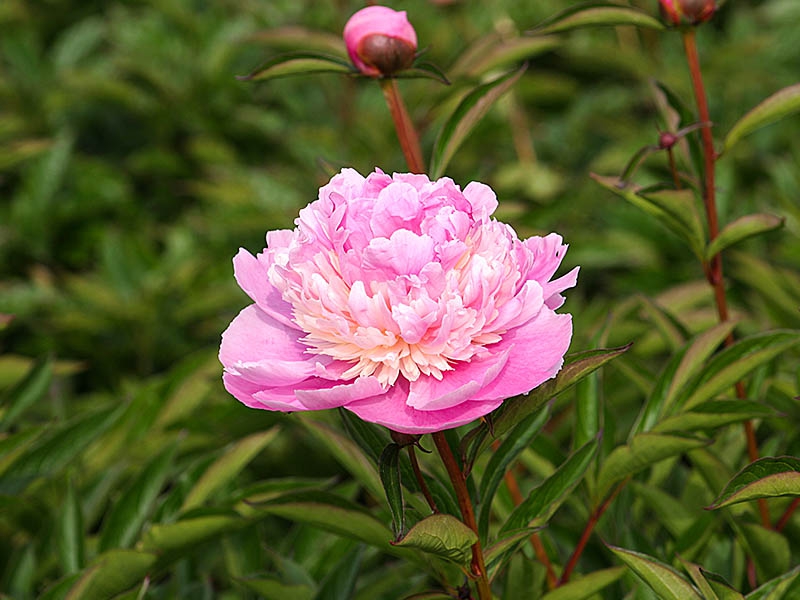
Peonies (Paeonia lactiflora) are beloved plants in many gardens due to their beautiful flowers and perennial nature. The following is information regarding the growth characteristics, propagation methods, cultivation methods, garden uses, major pests and diseases, and control methods. Growth Characteristics - Lifespan: As a perennial herbaceous plant, new shoots emerge every spring, and it enters a dormant state during the winter. - Sunlight: It grows best in sunny locations, but can adapt to partial shade to some extent. - Soil: It thrives in well-drained soil, and a soil pH close to neutral is recommended. - Height: Generally grows to about 60–100 cm. Propagation Methods - Seeds: It can be propagated by seeds, but germination may take a long time. - Root Division: It is generally propagated by dividing the roots in the autumn. It is recommended to divide and replant the roots every 3 to 4 years. Cultivation Methods - Planting Time: Generally, September to October is the optimal time. Planting during this period allows the roots to establish themselves during the winter, increasing the likelihood of healthy new shoots emerging in the spring. - Planting Depth: Plant so that the root bud is located about 5 cm below the soil surface. - Watering: Water thoroughly during the initial period after planting to ensure proper establishment, then avoid overwatering thereafter. - Fertilizer: It is recommended to apply organic fertilizer in late autumn. Garden Uses - Landscaping: It is highly popular for landscaping purposes as it allows one to appreciate flowers of various colors and varieties. - Placement: Plant in the center or at the edges of the garden, harmonizing with other herbaceous plants. Major Pests and Diseases & Control Methods - Diseases: Leaf spot disease, which causes spots on the leaves, may occur. Control this using sulfur or copper-based fungicides. - Pests: Aphids and moth larvae can be a problem. Control them using systemic insecticides after periodic observation. - Prevention: Maintaining healthy potting mix, proper ventilation, and drainage can help reduce pests and diseases. Peonies are plants that can be enjoyed for a long time in the garden if properly cared for. Please note that they require meticulous care tailored to their growth cycle.
Plant Type
Plant Family
Ranunculaceae
Height
50~70cm
Spread
Colors
pink
Bloom Period
May to June
Water Needs
commonly
Exposure
semi-shaded area
Freezing Resistance
-30°C
wild peony
Paeonia obovata
hairy peony
Paeonia japonica var. pillosa