English
한국어
English
Español
中文
हिंदी
Home
News
Community
Dictionary
English
한국어
English
Español
中文
हिंदी
View list
Oriental poppy 'Snow Goose'
Papaver oriental
'Snow Goose'
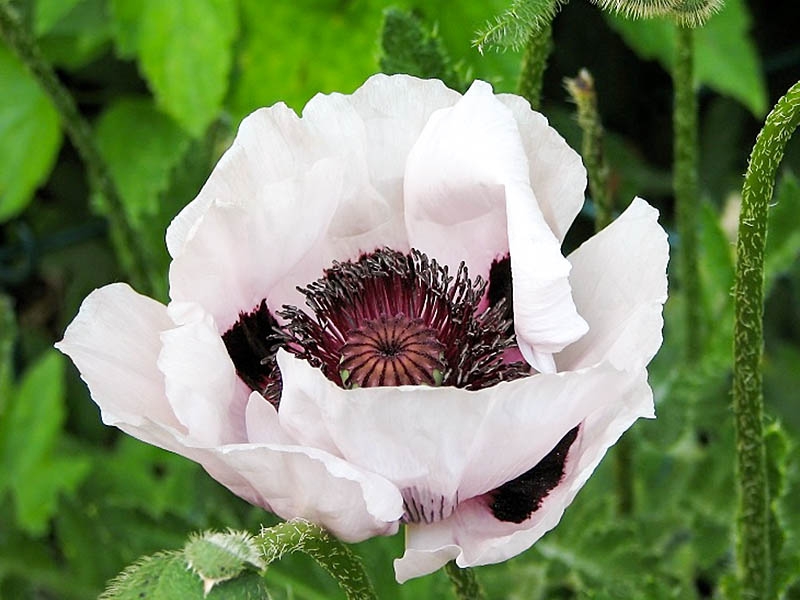
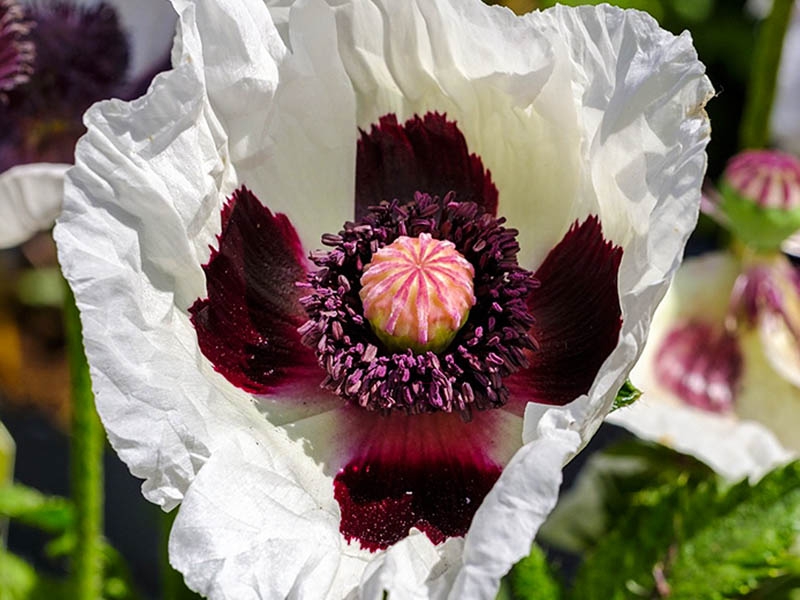
Oriental Poppy 'Snow Goose' (Papaver orientale 'Snow Goose') Growth Characteristics The Oriental Poppy 'Snow Goose' is a perennial herbaceous plant that typically grows to a height of 60 to 90 cm. The flowers are large and eye-catching, displaying a pale hue that is mostly close to white. There are black stamens in the center of the petals, creating a distinct contrast. It blooms from late spring to early summer, and tends to lose its flowers and leaves by the end of summer. Propagation Methods This plant is primarily propagated by seeds or root division. It is best to sow seeds immediately after collecting them from mature flowers. Germination occurs within about 2 to 3 weeks after sowing, and germinated seedlings should be transplanted in early spring or autumn when temperatures are low. Root division is generally best performed in the autumn after the flowers have faded. Cultivation Methods Oriental poppies prefer well-drained soil and sunny locations. The plant thrives in soil with a pH of slightly acidic to neutral (6.0–7.0) and grows well in soil rich in organic matter. It does not require excessive watering, but care must be taken to prevent the soil from drying out, especially during the summer. It is resistant to cold in winter, so no special protective measures are necessary. Uses in the GardenDue to its showy flowers, the 'Snow Goose' is primarily used as an ornamental plant in gardens. It can be planted alongside other flowers to create a garden with color combinations, and its beauty is further enhanced when planted in clusters. The stems, which continue to produce seeds even after blooming, provide a natural atmosphere to the garden. Important Pests and Control MethodsOriental poppies are generally resistant to pests and diseases, but they can be susceptible to root rot or leaf mold due to excessive moisture or poor drainage. In such cases, it is necessary to remove affected parts and create an environment with good drainage. Aphids may appear as pests; if an infestation occurs, they can be controlled naturally by spraying soapy water or utilizing natural predators. This plant can cause allergic reactions, so caution is required when planting and managing it.
Plant Type
Plant Family
poppy family
Height
60cm
Spread
40cm
Colors
white
Bloom Period
May~June
Water Needs
commonly
Exposure
Sunny
Freezing Resistance
-30°C
Oriental Poppy 'Turken Lewis'
Papaver orientale 'Turkenlouis'
Oriental Poppy 'Royal Wedding'
Papaver orientale 'Royal Wedding'