English
한국어
English
Español
中文
हिंदी
Home
News
Community
Dictionary
English
한국어
English
Español
中文
हिंदी
View list
crab bat herb
Parasenecio adenostyloides
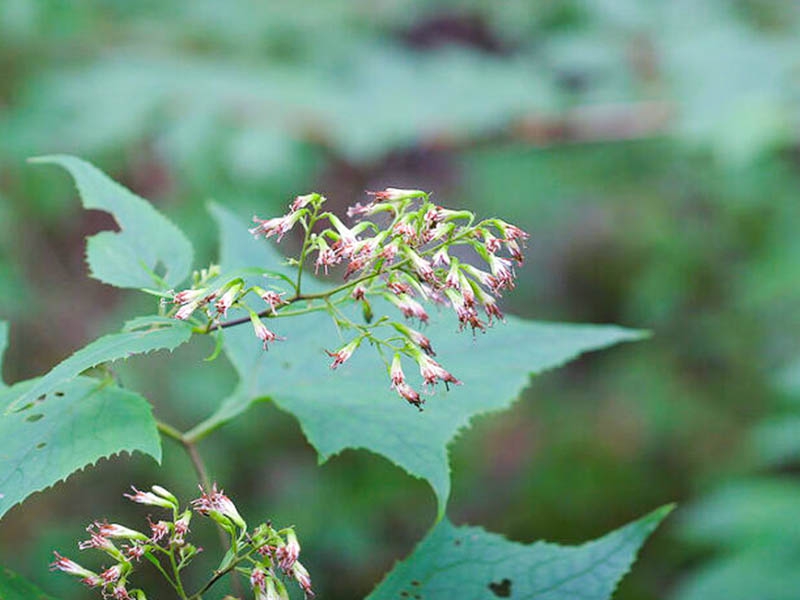
Parasenecio adenostyloides is a perennial plant that grows primarily at the edges of forests or in semi-shaded areas of high mountains. It is one of Korea's endemic species, growing wild mainly in the Gangwon-do region. Growth Characteristics: Parasenecio adenostyloides typically grows to a height of about 50 to 100 cm. Its leaves are broadly oval with serrated edges. Flowers bloom from summer to autumn and are white or pale yellow. This plant thrives even in cold climates and is relatively easy to care for. Propagation Methods: This plant is primarily propagated by seeds. Seeds can be harvested in the autumn and sown immediately, or stored in the refrigerator in the spring before sowing. Propagation by dividing the roots is also possible. Cultivation Methods: Parasenecio adenostyloides prefers semi-shaded environments and well-drained soil. It is best to avoid strong direct sunlight. When planting, it is advisable to mix sufficient organic matter into the soil, and care should be taken to avoid overwatering. Garden Use: This plant is suitable as an ornamental plant for shady gardens or forest edges. In particular, the flowers that bloom from summer to autumn add natural beauty to the garden. Important Pests and Control Methods: Although Adenostyloides is relatively resistant to pests and diseases, mold or aphids may rarely occur on the leaves. Mold can be prevented by maintaining a well-ventilated environment, while aphids can be controlled using appropriate insecticides. Snails can also occasionally be a problem, so the plant should be inspected periodically, and control measures should be taken if necessary. Please refer to the information above to cultivate and care for Adenostyloides and make good use of it in your garden.
Plant Type
Plant Family
Asteraceae
Height
1~2m
Spread
10~20cm
Colors
white
Bloom Period
June to September
Water Needs
commonly
Exposure
semi-shaded area
Freezing Resistance
-10°C
Narae batweed
Parasenecio auriculatus var. kamtschatica
Minji's Fern
Parathelypteris japonica var. glabrata