English
한국어
English
Español
中文
हिंदी
Home
News
Community
Dictionary
English
한국어
English
Español
中文
हिंदी
View list
Daebanha
Pinellia tripartita
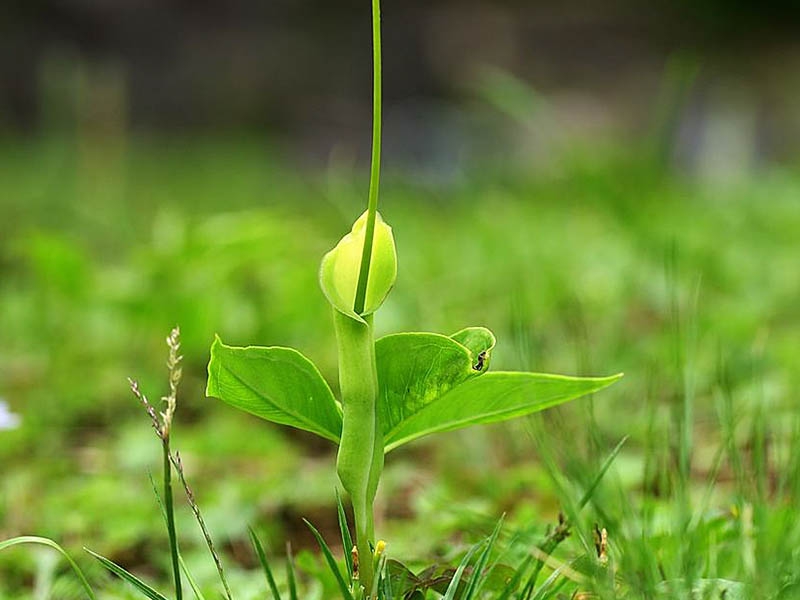
Pinelia tripartita is a perennial herbaceous plant belonging to the Araceae family. The following is information regarding this plant's growth characteristics, propagation methods, cultivation methods, garden uses, and major pests and diseases, as well as control methods. - Growth Characteristics: - Pinelia thrives even in relatively shaded environments, and growth is promoted in soil with sufficient moisture. - The foliage becomes lush in the summer, and the plant grows to a height of approximately 30 to 50 cm. - It features distinctive arrow-shaped leaves and produces white or light green flowers. - Propagation Methods: - It is primarily propagated by separating rhizomes (tubers). - After separating the tubers, each piece can be planted separately to grow into a new individual. - Spring or autumn is the appropriate time for propagation. - Cultivation Methods: - It is best to cultivate it in well-drained soil, and excessive soil moisture should be avoided. - It thrives in areas with some shade, but it can also grow in direct sunlight. - Water in moderation to prevent the soil from drying out. - Use in the Garden: - Daebanha is popular as an ornamental plant in the garden due to its unique leaf shape and flowers. - It can be used to create a shaded garden or a forest-like atmosphere. - It is ideal for planting along the edges of flower beds or around stone walls. - Major Pests and Control Methods: - While generally resistant to pests, care must be taken regarding root rot caused by excessive moisture. - This can be prevented by maintaining a well-ventilated environment and improving soil drainage. - Pests such as aphids and snails may occur; control them using appropriate insecticides if necessary. By referring to this information, you can cultivate Daebanha healthily.
Plant Type
Plant Family
Araceae
Height
20~50cm
Spread
Colors
green
Bloom Period
April to July
Water Needs
commonly
Exposure
semi-shaded area
Freezing Resistance
-10°C
Chamnamul, no breath
Pimpinella anisum
Banha
Pinellia ternata