English
한국어
English
Español
中文
हिंदी
Home
News
Community
Dictionary
English
한국어
English
Español
中文
हिंदी
View list
Viola Fedatifida
Viola pedatifida
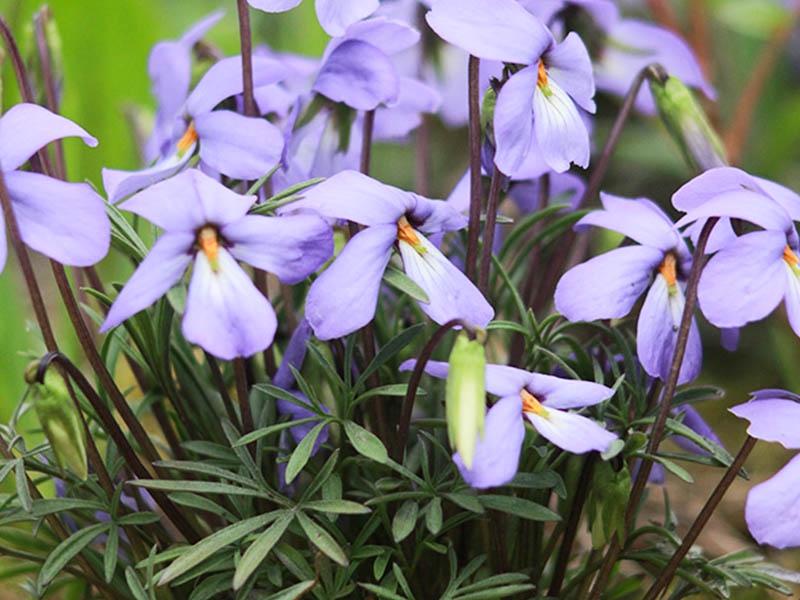
Viola pedatifida is a perennial native to North America that grows primarily in meadows and open forests. I will explain the growth characteristics, propagation methods, cultivation methods, garden uses, and major pests and diseases, as well as control methods for this plant. Growth Characteristics - Leaves and Flowers: Viola pedatifida has leaflets and produces small purple or violet flowers. - Roots: It has taproots that grow deep. - Growing Environment: It prefers sunny meadows or partial shade and favors well-drained soil. Propagation Methods - Seed Propagation: Seeds form on the fruit after flowering; these can be collected and sown. - Division: If the roots have proliferated sufficiently, new plants can be obtained by dividing the plant in early spring or autumn. Cultivation Methods - Soil: Prefers soil that is rich in organic matter and well-drained. - Watering: Avoid overwatering and ensure good drainage. - Sunlight: Grows well in locations with moderate sunlight; it is best to avoid strong direct sunlight. Uses in the Garden - Border Plant: Planting along garden edges or borders creates a natural effect. - Wildflower Garden: Planting it alongside other wildflowers can emphasize a natural aesthetic. Important Pests and Control Methods - Diseases: Generally resistant, but root rot can occur due to overwatering. - Control: Prevent root rot by ensuring good ventilation and drainage. - Pests: Leaves may be damaged by caterpillars or aphids. - Control: Control can be achieved by using organic insecticides or by washing the leaves with water. Viola fedatipida is an attractive plant that adds variety to your garden without requiring much maintenance. It has the characteristic of growing well on its own if provided with the right environment, so it is suitable for beginners.
Plant Type
Plant Family
Violet family
Height
10~20cm
Spread
10~20cm
Colors
purple
Bloom Period
April to June
Water Needs
commonly
Exposure
Sunny
Freezing Resistance
-15°C
Viola rostrata
Viola rostrata
Viola Langsdorff
Viola langsdorffii