English
한국어
English
Español
中文
हिंदी
Home
News
Community
Dictionary
English
한국어
English
Español
中文
हिंदी
View list
wild apricot tree
Prunus mandshurica
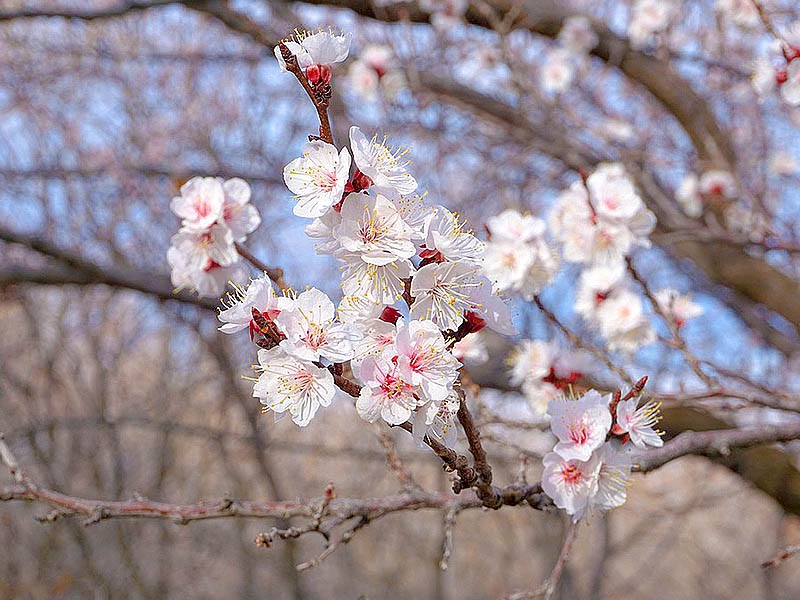
Prunus mandshurica #Growth Characteristics The Korean apricot tree is a deciduous broad-leaved tree adapted to cold temperate climates, primarily distributed in the Korean Peninsula, northern China, and eastern Russia. It grows to a height of approximately 3 to 5 meters, and its leaves are egg-shaped with serrated edges. Flowers bloom in white or light pink between April and May, while the fruit ripens between July and August, changing from yellow to orange. #Propagation Methods The Korean apricot tree is primarily propagated through seed propagation and grafting. - Seed Propagation: After harvesting seeds from mature fruit, remove the shells, dry them, and store them in the refrigerator. Sow the seeds indoors in late winter or early spring, and transplant them outdoors once the sprouts emerge. - Grafting: Grafting can be performed using other Prunus species as rootstock, primarily in the spring. #Cultivation Methods Prunus apricots thrive in well-drained soil and prefer locations with ample sunlight. A soil pH range of neutral to slightly acidic is suitable. When planting, it is recommended to leave sufficient spacing to ensure good air circulation and prevent diseases. #Uses in Gardens Prunus apricots are widely used as garden trees due to their beautiful flowers in spring and colorful fruits in summer. They are also suitable as landscaping plants and are planted in various locations such as parks and schools. #Important Pests and Control Methods - Diseases: - Brown Spot: A disease causing brown spots on the leaves. Remove infected areas and use fungicides to prevent further spread. - Peach Mold: A disease where mold grows on the fruit. Prevention involves creating an environment where moisture is removed and air is well-ventilated. - Pests: - Peach Blossom Borer: Damages the tree bark and fruit. Control is achieved by installing pheromone traps to capture adult moths or using insecticides. - Spider mites: They cause damage by gnawing on the leaves. To eliminate them, spray with soapy water or use professional insecticides. Proper care and periodic monitoring are important for keeping the wild apricot tree healthy.
Plant Type
Plant Family
Rosaceae
Height
5∼10m
Spread
Colors
white, pink
Bloom Period
April to May
Water Needs
commonly
Exposure
Sunny
Freezing Resistance
-40°C
Hongmancheop plum
Prunus mume f. alphandi
wild cherry tree
Prunus glandulifolia