English
한국어
English
Español
中文
हिंदी
Home
News
Community
Dictionary
English
한국어
English
Español
中文
हिंदी
View list
almond
Prunus dulcis
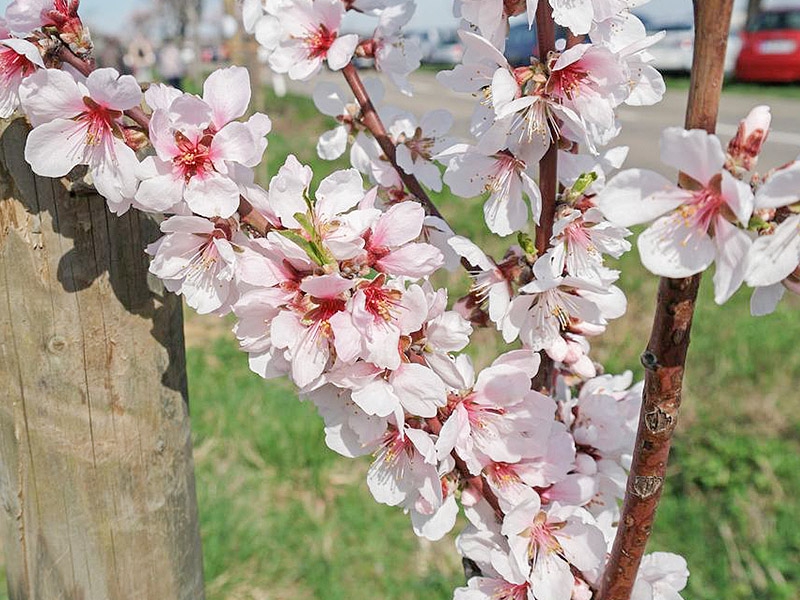
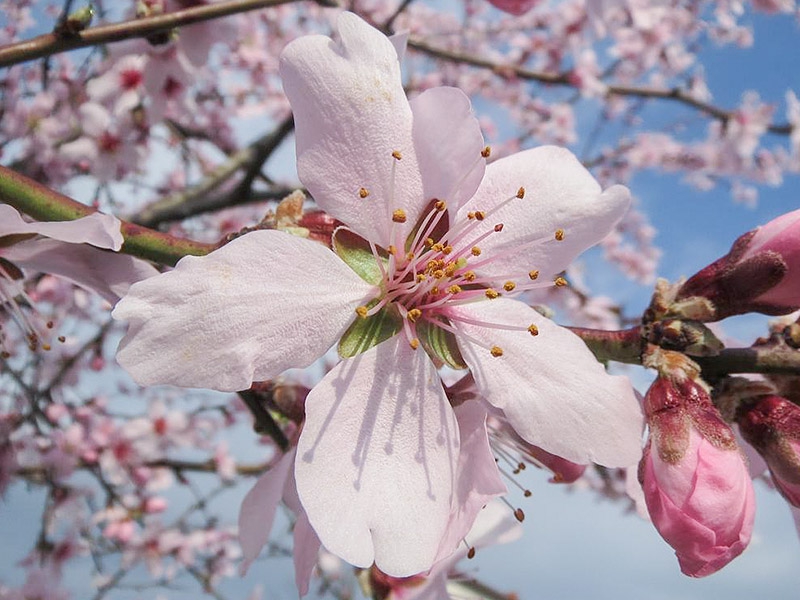
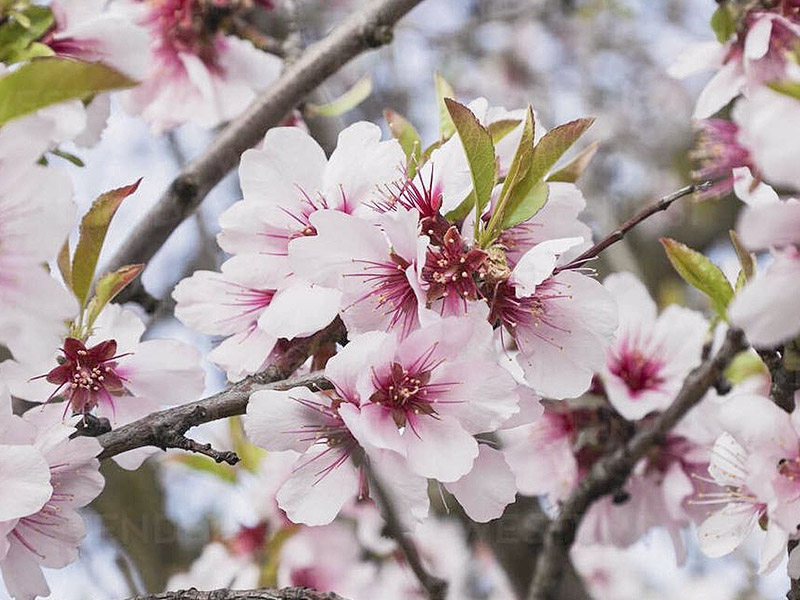
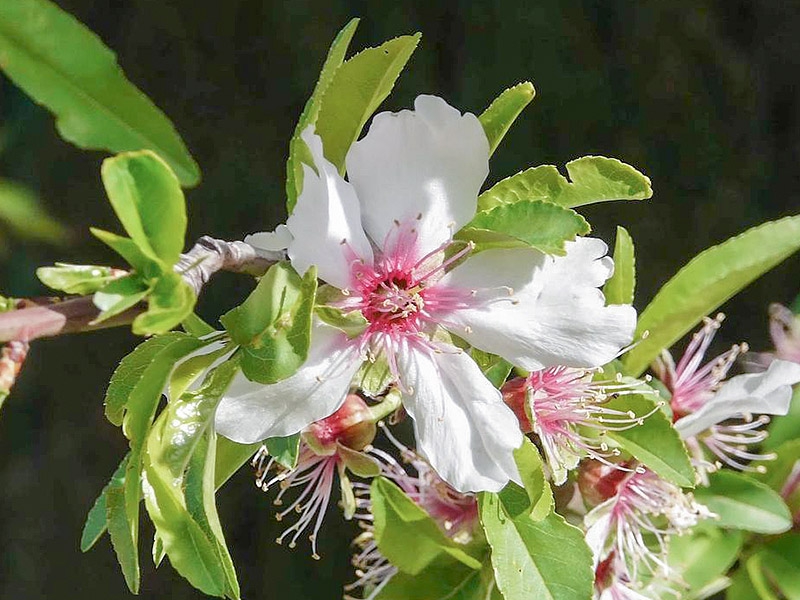
I will explain the growth characteristics, propagation methods, cultivation methods, garden uses, major pests and diseases, and control methods of the almond (Prunus dulcis). Growth Characteristics Almond trees prefer a warm climate and thrive particularly well in dry and warm regions. They grow to an average height of about 4 to 10 meters with broad branches. Almond trees grow better with ample sunlight and exhibit particularly good growth in well-drained soil. They are primarily cultivated in regions with low average annual rainfall and long summers. Propagation Methods Almonds are mainly propagated by grafting and seeds. Grafting is primarily used in commercial almond cultivation and allows for the preservation of desired cultivar characteristics. Seed propagation takes more time and may result in mutations, so it is mainly used for variety development. Cultivation Methods - Soil Preparation: Prepare well-drained and fertile soil. Soil with a pH of 6 to 7 is suitable. - Planting: When initially transplanting, plant at intervals of 5 to 7 meters. 3. Watering: Water appropriately, avoiding overwatering; supplemental watering is necessary during droughts. - Pruning: Pruning annually helps shape the tree and prevents pests and diseases. Uses in the Garden Almond trees are also suitable as ornamental trees. Showy white or pink flowers bloom in the spring, beautifully decorating the garden. However, more space may be required for harvesting. Important Pests and Control Methods - Sclerotinia Root Disease: This primarily occurs in humid environments and affects leaves and fruit. It is prevented by using appropriate chemical agents along with periodic pruning. - Aphids: They suck sap from leaves, causing leaf deformation and inhibiting growth. They can be removed using natural predators like ladybugs or soapy water. - Peach Leafroller Moth: This gnaws on leaves and fruit, adversely affecting growth. It is controlled using pheromone traps and insecticides. Control Methods With proper care, almond trees grow healthily for a long time and bear abundant fruit. If you understand these characteristics well and manage them properly, you can successfully grow almond trees in your garden.
Plant Type
Plant Family
Rosaceae
Height
3~8m
Spread
3~4.5m
Colors
pink
Bloom Period
March to April
Water Needs
commonly
Exposure
Sunny
Freezing Resistance
-15°C
Fuji cherry tree 'Gojo no Mai'
Prunus incisa 'Kojo-No-Mai'
Early cherry 'autumnalis'
Prunus × subhirtella 'Autumnalis'