English
한국어
English
Español
中文
हिंदी
Home
News
Community
Dictionary
English
한국어
English
Español
中文
हिंदी
View list
fawn's foot
Orthilia secunda
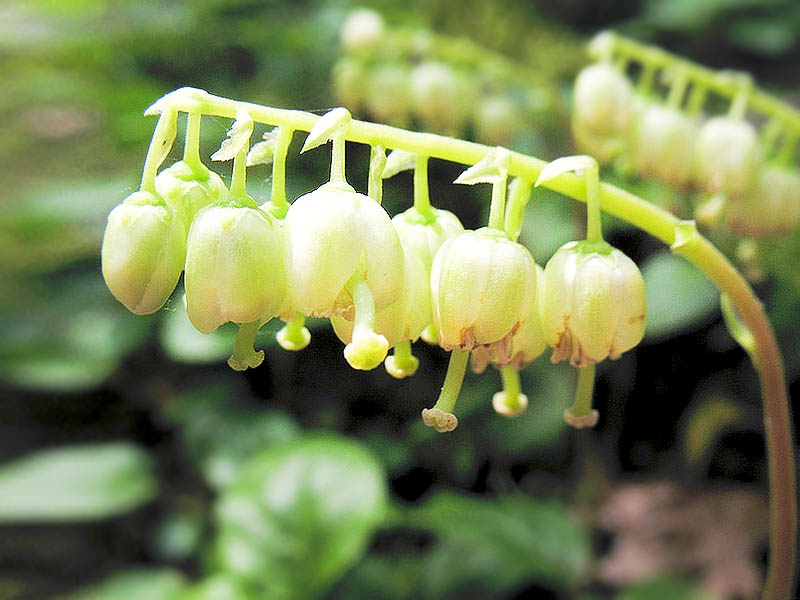
Orthilia secunda is an evergreen perennial that grows primarily in shady areas of forests or in moist soil. The plant grows to a height of approximately 10 to 30 cm; its leaves are thick and glossy, and small white or pale green flowers bloom in racemes. Growth Characteristics: Orthilia secunda thrives in shade but can tolerate some sunlight. It prefers moist soil and grows optimally in well-drained soil. However, excessively wet environments are not suitable. Propagation Methods: It is primarily propagated by seeds and root division. When propagating by seeds, mature seeds are collected in the autumn and sown in the spring. Root division can be done in the spring or autumn; simply divide the plant's roots carefully and plant them. Cultivation Methods: - Select well-drained soil for planting. - Choose a shady location for planting. - Water consistently and maintain moisture for the first few weeks after planting. 4. Fertilize every spring to encourage abundant foliage and flowers. Garden Uses: Pterocarya can be used as a ground cover in shaded gardens and is suitable for creating a natural forest atmosphere. Additionally, planting it between plants of varying heights can enrich the garden structure. Major Pests and Control Methods: Major pests include aphids and leaf beetles, and fungal diseases may occur if moisture is excessive. Control methods are as follows: - Aphids: Spray with soapy water or purified water. - Fungal diseases: Ensure good ventilation and remove infected leaves or stems. - Environmental Improvement: Improve soil drainage if necessary. Pterocarya is relatively easy to care for, making it a suitable plant for gardening beginners. If the given growing environment is properly maintained, you can enjoy a healthy plant for a long time.
Plant Type
Plant Family
deer's foot family
Height
7∼15cm
Spread
Colors
white
Bloom Period
July–August
Water Needs
commonly
Exposure
semi-shaded area
Freezing Resistance
-30°C
Pink deer feet
Pyrola incarnata
Baby deer's foot
Pyrola denticulata