English
한국어
English
Español
中文
हिंदी
Home
News
Community
Dictionary
English
한국어
English
Español
中文
हिंदी
View list
Lativida Pinata
Ratibida pinnata
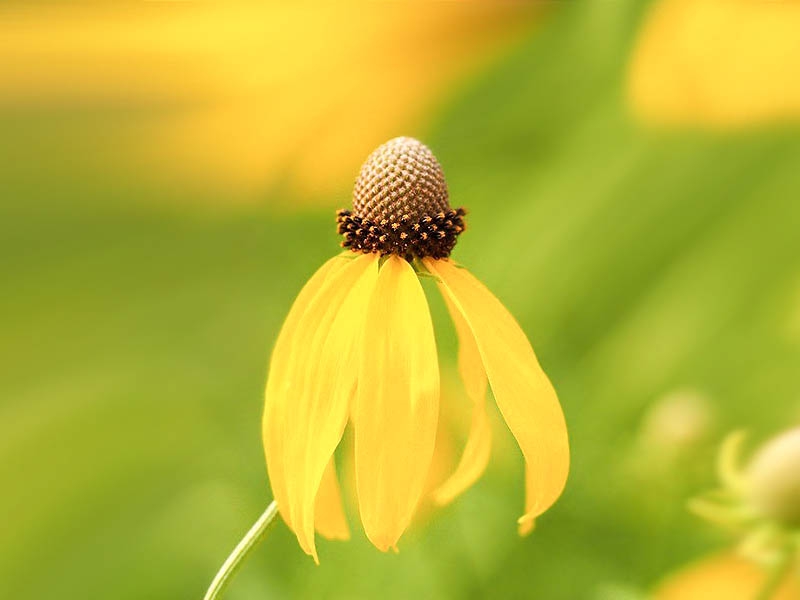
Ratibida pinnata is a perennial herbaceous plant belonging to the Asteraceae family, primarily native to North America. It is also commonly known as "fennel" or "grayhead cone flower." The following is information regarding the growth characteristics, propagation methods, cultivation methods, garden uses, and pest and disease control methods of Ratibida pinnata. Growth Characteristics - Height: Grows to a height of 60 cm to 150 cm; the stems are straight and hairy. - Leaves: The leaves are deeply lobed in a feather-like pattern and have a rough texture. - Flowers: Yellow flowers bloom from summer to autumn, and the central conical inflorescence changes from gray to brown. - Environment: A sun-loving plant that thrives in well-drained soil. It can also tolerate dry environments. Propagation Methods - Seeds: It is primarily propagated by seeds, which are sown in the spring. Seeds germinate well if lightly covered with soil and watered. - Root Division: It can also be propagated by dividing the roots in early spring or autumn. Cultivation Method - It is best to grow it in a sunny location and maintain moderate moisture. - It is advisable to avoid overly humid environments, and well-draining soil is ideal. - While fertilizer is not strictly necessary, applying a small amount of organic fertilizer during the early stages of growth is beneficial. Uses in the Garden- Lativida pinnata fits well in gardens with a natural atmosphere. - It is suitable for planting in flowerbeds or as a border plant, and is particularly useful in ecological gardens as it attracts butterflies and bees. - Since it is a tall plant, it is best to plant it in the back row. Important Pests and Diseases & Control Methods - Diseases: It is generally resistant to diseases, but root rot may occur if the soil is excessively wet. To prevent this, attention must be paid to drainage. - Pests: While there is generally no significant damage from specific pests, aphids may rarely occur. In such cases, the problem can be resolved by washing with water or soapy water. - It is also a good idea to attract beneficial insects to the garden to control pests naturally. The relatively easy-to-care-for Lativida pinnata adds vibrancy to the garden with its colorful hues and textures.
Plant Type
Plant Family
Asteraceae
Height
90~150cm
Spread
30~60cm
Colors
yellow
Bloom Period
June to August
Water Needs
commonly
Exposure
Sunny
Freezing Resistance
-30°C
Ratibida columnifera
Indian Ministry Serpentina
Rauvolfia serpentina