English
한국어
English
Español
中文
हिंदी
Home
News
Community
Dictionary
English
한국어
English
Español
中文
हिंदी
View list
Lexia Birginica
Rhexia virginica
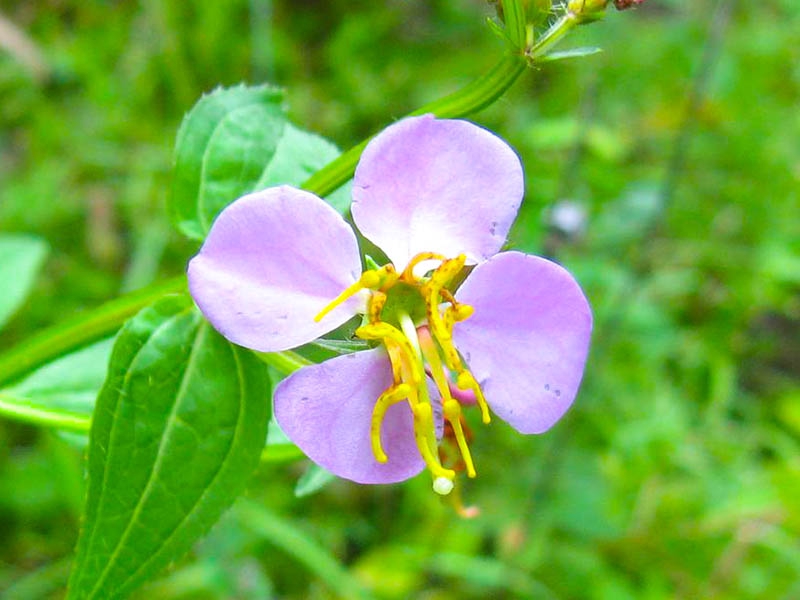
Rhexia virginica is a herbaceous plant native primarily to North America, possessing the following growth characteristics: Growth Characteristics - Environment: It thrives in sunny locations and prefers moist soil. It grows healthily in well-drained soil. - Growth Form: It is a perennial herbaceous plant that typically grows to a height of 30–90 cm. - Leaves and Flowers: The leaves are arranged symmetrically, and the flowers are reddish-purple, blooming between summer and autumn. Propagation Methods - Seed Propagation: It propagates naturally through seeds; seeds can be collected in the autumn and sown the following spring. - Root Division: Propagation by dividing the roots is also possible. This is usually done in spring or early autumn. Cultivation Methods - Planting: Fill a well-draining pot with potting soil, plant the plant, and water thoroughly. - Watering: It likes moisture, so water sufficiently, but be careful to prevent water from pooling. - Fertilizer: It is recommended to apply slow-release fertilizer in the spring and autumn. Uses in the Garden- Lexia virginica is widely used as an ornamental plant in gardens due to its beautiful flowers and unique leaf shape. - Planting it near water or in moist areas can create a natural garden atmosphere. Important Pests and Control Methods - Pests and Diseases: It is relatively resistant to pests and diseases, but it may rarely be attacked by aphids. - Control Methods: If aphids appear, they can be removed by hand or organic insecticides can be used. It is important to periodically observe the plant's condition and take preventive measures. To successfully grow Lexia virginica in the garden, it is important to adhere to these environmental conditions and care methods.
Plant Type
Plant Family
Pomegranate family
Height
30~60cm
Spread
30~60cm
Colors
pink
Bloom Period
May to August
Water Needs
commonly
Exposure
Sunny
Freezing Resistance
-20°C
Rhubarb 'Goliath'
Rheum rhabarbarum 'Goliath'
Linephyllum parvifolium
Rhinephyllum parvifolium