English
한국어
English
Español
中文
हिंदी
Home
News
Community
Dictionary
English
한국어
English
Español
中文
हिंदी
View list
Black lacquer tree
Toxicodendron succedaneum
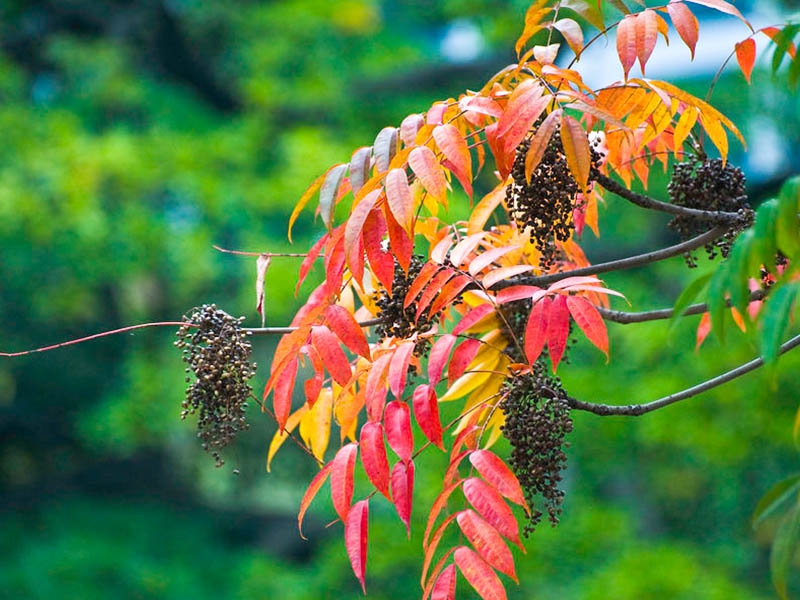
Toxicodendron succedaneum has the following growth characteristics, propagation, and cultivation methods. Growth Characteristics - Environment: Toxicodendron succedaneum thrives in sunny locations and prefers well-drained soil. - Temperature: It generally grows well in the Korean climate, but may not thrive in extremely cold regions. - Size: Mature trees typically grow up to 5–10 meters tall. Propagation Methods - Seeds: Harvest seeds when the fruit ripens in the autumn and plant them immediately, or sow them in the spring. - Cuttings: It can be propagated by cutting well-developed branches during the summer. Cultivation Methods - Planting Medium: It must be planted in well-drained soil, and it should be watered thoroughly after planting. - Fertilizer: It is recommended to use organic or compound fertilizers in the spring and autumn to promote growth. - Pruning: Prune branches in winter or early spring to maintain the tree's shape. Use in the Garden - The Japanese lacquer tree has decorative value due to its unique leaves and fruit. It is excellent as a garden tree for harmonizing with other plants. Important Pests and Control Methods - Diseases: It is generally susceptible to red blight or fungal diseases. This can be managed through adequate ventilation and preventive fungicides. - Pests: Pests such as leaf roller moths may occur; if pests are detected, control them immediately using insecticides. While this plant is suitable for garden use or creating natural landscapes, caution is required as it may irritate the skin upon contact.
Plant Type
Plant Family
Anacardiaceae
Height
13m
Spread
Colors
yellow
Bloom Period
May~June
Water Needs
commonly
Exposure
Sunny
Freezing Resistance
-15°C
poison ivy
Toxicodendron trichocarpum
Rhus javanica
Rhus chinensis