English
한국어
English
Español
中文
हिंदी
Home
News
Community
Dictionary
English
한국어
English
Español
中文
हिंदी
View list
Mountain lacquer tree
Toxicodendron sylvestre
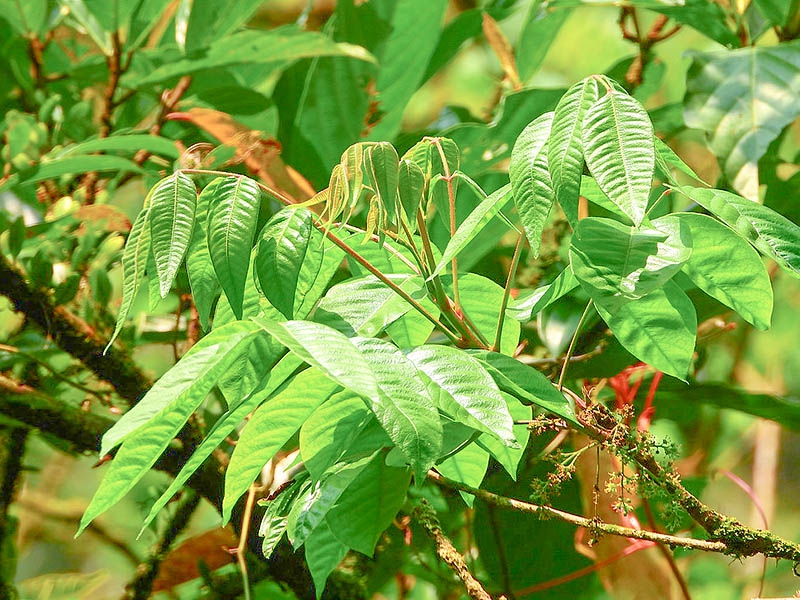
Growth Characteristics of Toxicodendron sylvestre Toxicodendron sylvestre is a plant that grows primarily in the temperate regions of Asia and belongs to the Anacardiaceae family. It is mainly found at the foothills or forest edges and prefers sunny environments. It possesses relatively strong vitality even in cold winters and thrives in dry environments. Propagation Methods Toxicodendron sylvestre is primarily propagated by seeds. Seeds are harvested from mature fruits in the autumn and either planted immediately or stored for planting in the spring. The seeds have a relatively high germination rate, and germination begins within 2 to 4 weeks under suitable conditions. Cultivation Methods - Soil Preparation: Toxicodendron sylvestre grows healthily in well-drained soil. The soil pH ranges from moderate to slightly acidic. - Planting: Spring or autumn is the appropriate time for planting. When planting, leave sufficient space to allow the roots to expand fully. 3. Watering: When first planting, provide sufficient water to help the roots establish themselves. Afterward, relying on natural rainfall is sufficient, but additional watering may be necessary during prolonged droughts. - Fertilization: Although it grows well without special nutrient supply, it is recommended to apply organic fertilizer in the spring to promote growth. Uses in the Garden Red lacquer tree is widely used as a decorative plant in gardens due to its unique leaf shape and beautiful red autumn foliage. However, since contact can cause dermatitis, it is best to plant it in an area with minimal human traffic if possible. Important Pests and Control Methods Red lacquer tree is generally resistant to pests and diseases, but the following can occasionally cause problems: - Aphids: These can damage leaves and stems; they can be easily controlled in the early stages using plant oil or soapy water. - Rust: Green or yellow spots may appear on the leaves. To prevent this, ensure good ventilation and use pesticides if necessary. 3. Lily Disease: This can occur in environments with heavy rain or high humidity. Improve ventilation through proper pruning and use appropriate fungicides if necessary. Caution: Excessive use of pesticides can be harmful to the environment, so please prioritize organic methods for pest control.
Plant Type
Plant Family
Anacardiaceae
Height
8m
Spread
Colors
green
Bloom Period
May
Water Needs
commonly
Exposure
Sunny
Freezing Resistance
-30°C
Rhus javanica
Rhus chinensis
poison ivy
Toxicodendron orientale