English
한국어
English
Español
中文
हिंदी
Home
News
Community
Dictionary
English
한국어
English
Español
中文
हिंदी
View list
poison ivy
Toxicodendron orientale
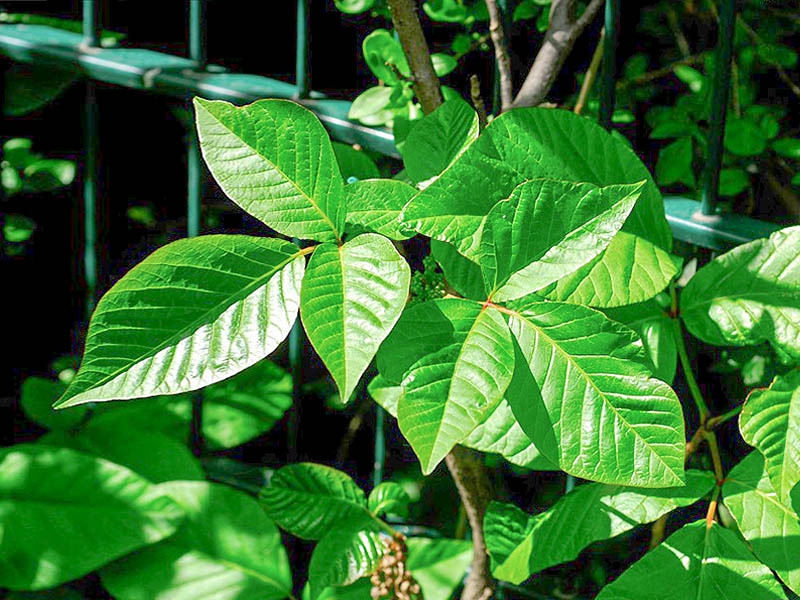
Toxicodendron orientale is a plant native to East Asia, including Korea, and grows primarily in mountainous areas or forests. This tree requires caution due to its unique growth characteristics. Growth CharacteristicsToxicodendron orientale grows primarily as a vine and has the ability to climb trees or structures. Its leaves are alternate, oval or egg-shaped, and have serrated margins. A unique feature is that this tree contains a chemical called urushiol, which can cause contact dermatitis. Propagation MethodsToxicodendron orientale primarily propagates by seeds; when the fruit matures in the autumn, the seeds fall and germinate. Since the germination rate is not high, sowing a large quantity of seeds is effective. It can also propagate by allowing new shoots to emerge from the roots. Cultivation MethodsToxicodendron orientale thrives in typical mountainous soils and does not require special soil improvement. However, it prefers well-drained soil. While it likes sunlight, it can also grow in partial shade. You must be careful not to overwater, as this can cause the roots to rot. Uses in the GardenRed poison ivy is sometimes cultivated as an ornamental plant due to its unique leaf shape and the red color of its leaves in the autumn. However, since it can cause dermatitis in humans, it is recommended to plant it in a well-maintained location with restricted access. Important Pests and Control MethodsRed poison ivy is relatively resistant to pests and diseases, but occasionally, fungal diseases or pests such as aphids may occur on the leaves. If fungal diseases occur, remove the diseased leaves and spray with an appropriate pesticide. If aphids appear, they can be washed off with soap and water or removed with water in the early stages; it is advisable to use an appropriate pest control agent if necessary. When cultivating or managing red poison ivy, it is essential to wear protective gear to avoid direct contact. You must take care to ensure safe management and cultivation so that you can enjoy its beauty.
Plant Type
Plant Family
Anacardiaceae
Height
3m
Spread
Colors
yellow
Bloom Period
May~June
Water Needs
commonly
Exposure
Sunny
Freezing Resistance
-20°C
Mountain lacquer tree
Toxicodendron sylvestre
Rhus trilobata
Rhus trilobata