English
한국어
English
Español
中文
हिंदी
Home
News
Community
Dictionary
English
한국어
English
Español
中文
हिंदी
View list
broad-leaved gooseberry
Ribes latifolium
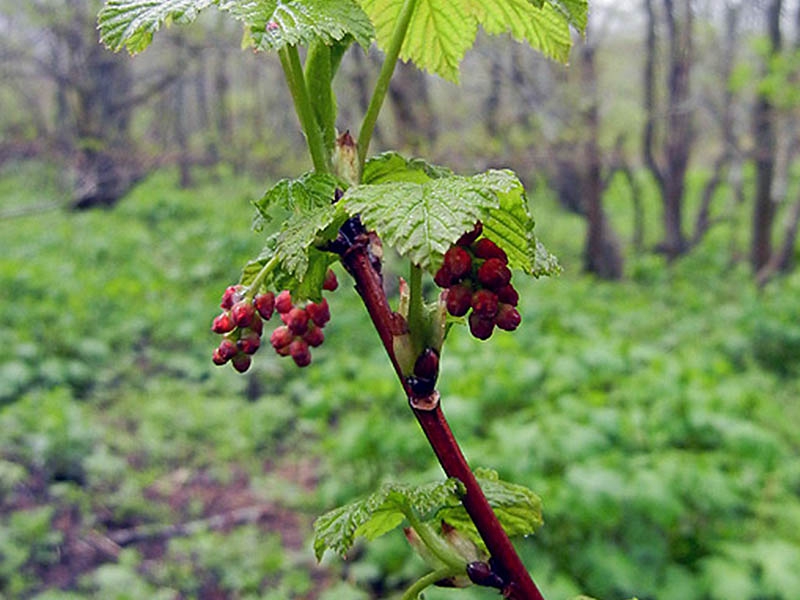
Ribes latifolium is a popular garden plant due to its attractive leaves and fruit. Below is information regarding this plant's growth characteristics, propagation methods, cultivation methods, garden uses, and major pests and diseases, as well as control methods. Growth Characteristics - Growing Environment: Ribes latifolium thrives in temperate climates and grows healthiest in sunny locations. It prefers well-drained soil and grows well in soil with a pH of slightly acidic to neutral. - Size: Mature trees typically grow up to about 1.5 meters in height and are about 1 meter wide. - Leaves and Flowers: The leaves are broad and dark green, while the flowers that bloom in spring and summer are usually small and yellowish-green. - Fruit: Fruit forms between late summer and early autumn and ripens to purple or black. Propagation Methods - Seeds: Propagation by seeds takes a long time, but it reproduces well in natural conditions. Plant the seeds immediately after harvesting, or store them in a cold place and sow them in the spring. - Cuttings: Propagation can be done using cut stems during the summer. Cut a healthy branch about 10–15 cm long, remove the leaves, and place it in water to encourage root growth. Cultivation Methods - Planting: It is recommended to plant 2–3 year old seedlings in the spring or autumn. Plants should be spaced at least 1 meter apart. - Watering: Consistent watering is necessary initially, but once the roots are established, it grows well even in relatively dry environments. - Fertilizer: Use organic fertilizer in late winter or early spring to replenish soil nutrients. Uses in the GardenBroad-leaved Ribes are planted for shade or used as ornamental plants. They are also useful in ecological gardens because they bear fruit that can provide food for small birds. Important Pests and Control Methods - Diseases: Diseases caused primarily by fungi can be a problem. If spots or wilting symptoms appear on the leaves, remove the diseased parts and apply a fungicide. - Pests: Aphids or moth larvae may appear. These pests can be removed by hand, or insecticides can be used as needed. I hope this information helps you successfully grow and manage your broad-leaved gooseberry.
Plant Type
Plant Family
Saxifragaceae
Height
1~2m
Spread
Colors
amethyst
Bloom Period
June~July
Water Needs
commonly
Exposure
Sunny
Freezing Resistance
-30°C
wild cherry
Ribes mandshuricum var. subglabrum
magpie's-tail gooseberry
Ribes komarovii