English
한국어
English
Español
中文
हिंदी
Home
News
Community
Dictionary
English
한국어
English
Español
中文
हिंदी
View list
Rose 'Dorothy Perkins'
Rosa hybri
'Dorothy Perkins'
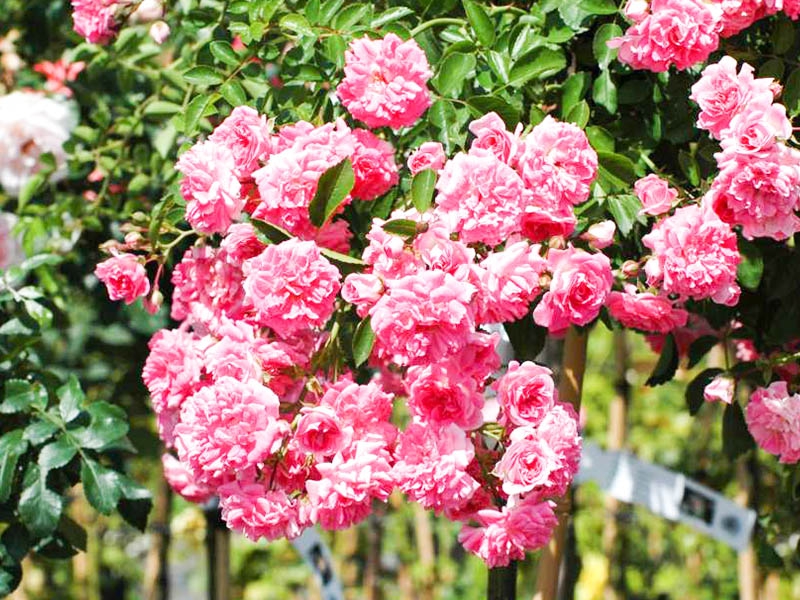
The rose 'Dorothy Perkins' (Rosa hybrid 'Dorothy Perkins') is a variety loved by many for its beautiful flowers and unique growth characteristics. The following is information regarding the 'Dorothy Perkins' rose's main growth characteristics, propagation methods, cultivation methods, garden uses, and important pests and diseases and control methods. Growth Characteristics - Form: 'Dorothy Perkins' is primarily a climbing rose that can grow up to 3 to 5 meters in height. It is characterized by small pink flowers blooming in clusters and producing a large number of flowers at once. - Leaves: The leaves are small, glossy, and dark green. - Flowering Season: The main flowering season is summer, with full bloom usually occurring between June and July. Propagation Methods - Cuttings: Rose cuttings can be taken from late summer to early autumn. Select a healthy stem, cut it to a length of 10–15 cm, leave two or three leaves on each cutting, and plant it in a pot. - Grafting: It can also be propagated through grafting. This is primarily performed by experienced gardeners. Cultivation Methods - Soil: It prefers well-drained soil. Conditions rich in organic matter and slightly acidic (pH 6.0–6.8) are important. - Sunlight: A location receiving at least 6 hours of direct sunlight per day is suitable. - Watering: Be careful not to overwater; water thoroughly when the soil dries out. Take particular care to avoid wetting the roots. - Fertilizer: It is best to apply rose-specific fertilizer in spring and summer. Use the minimum amount of fertilizer. Garden Uses - Climbing: 'Dorothy Perkins' is well-suited as a climbing rose for arches, fences, and decorative structures. - Cluster Arrangement: It can be arranged to create multiple focal points, allowing the stems to spread naturally. Important Pests and Control Methods - Powdery Mildew: May occur in environments with high humidity and poor ventilation. To prevent disease, improve ventilation, and use fungicides for control in the early stages. - Quarantine disease: If blackened leaves are observed, remove them immediately; copper-based fungicides may be used as a preventive measure. - Aphids: These are common pests affecting roses; they can be removed by hand or water, or pesticides can be used if necessary. 'Dorothy Perkins' roses can display their beauty to the fullest by providing proper care and matching environmental conditions. To achieve this, you must always pay attention to appropriate cultivation methods and pest and disease management.
Plant Type
Plant Family
Rosaceae
Height
3~6m
Spread
240cm
Colors
pink
Bloom Period
May~June
Water Needs
commonly
Exposure
Sunny
Freezing Resistance
-30°C
Rose 'Eternal Flame'
Rosa hybrid 'Eternal Flame'
Rose 'Debutante'
Rosa hybrid 'Debutante'