English
한국어
English
Español
中文
हिंदी
Home
News
Community
Dictionary
English
한국어
English
Español
中文
हिंदी
View list
Tungtungmadi
Salicornia europaea
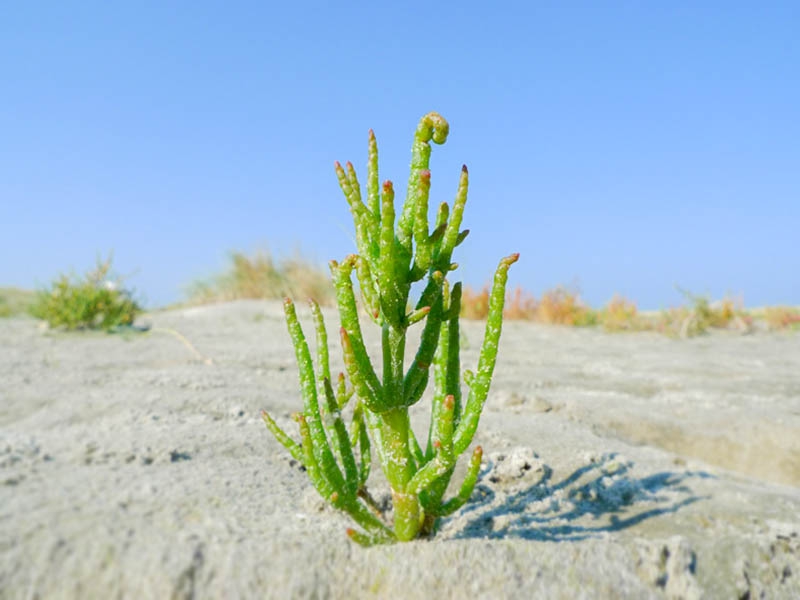
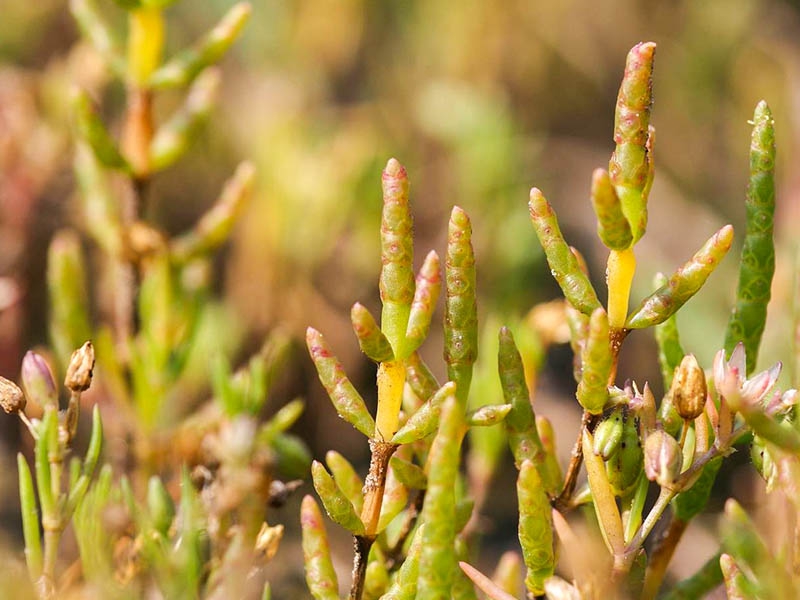
Salicornia europaea is a halophyte that grows primarily in high-salinity coastal areas or salt fields, characterized by its strong tolerance to salt. The following is information regarding this plant's growth characteristics, propagation methods, cultivation methods, garden uses, and major pests and diseases and control methods. Growth Characteristics - Environment: Salicornia europaea thrives in saline soil. It grows well even in salty sand or mud found along coastlines. - Growth Cycle: As an annual plant, it germinates in the spring, grows through the summer and autumn, and can be harvested. - Form: It typically grows to a height of 10–40 cm. The stems are thick, flexible, and fleshy with nodes. Propagation Methods - Seed Propagation: Salicornia europaea is primarily propagated by seeds. Seeds can be sown directly in the spring or germinated indoors and then transplanted. - Germination Conditions: Germination occurs optimally at temperatures between 15 and 25 degrees Celsius, and germination is possible even in environments with high salt content. Cultivation Methods - Soil Preparation: Soil with high salt content is suitable, and soil with good drainage and aeration is required. - Watering: It is better to use water containing salt when watering. - Fertilizer: It usually does not require special fertilizer, but a small amount of nitrogen fertilizer can be provided to aid growth. Garden Uses - Ornamental: It can be used as a decorative element to create landscapes reminiscent of a coastline. - Edible: The leaves and stems can be eaten in salads or added to various dishes. - Environmental Restoration: It is used to restore soil in areas with severe salinity or to enhance ecological value. Important Pests and Control Methods Although Salicornia is a relatively resistant plant to pests and diseases, a few issues may arise. - Fungal Diseases: These can occur due to excessive moisture, so ensure good drainage to prevent them. - Pests: General foliar pest control methods are used; soapy water or eco-friendly insecticides may be used if necessary. - Salt Damage Management: It is highly resistant to salt, so special salt damage control is not required. Salicornia is a unique plant capable of being cultivated in saline environments and can be utilized for various purposes, including food and environmental restoration. It can be grown healthily by providing a suitable environment and following basic care principles.
Plant Type
Plant Family
Chenopodiaceae
Height
10~30cm
Spread
Colors
green
Bloom Period
August~September
Water Needs
commonly
Exposure
Sunny
Freezing Resistance
-10°C
Salak palm
Salacca zalacca
walnut tree
Salix xerophila f. glabra