English
한국어
English
Español
中文
हिंदी
Home
News
Community
Dictionary
English
한국어
English
Español
中文
हिंदी
View list
Silla 'Rozea'
Scilla bifoli
'Rosea'
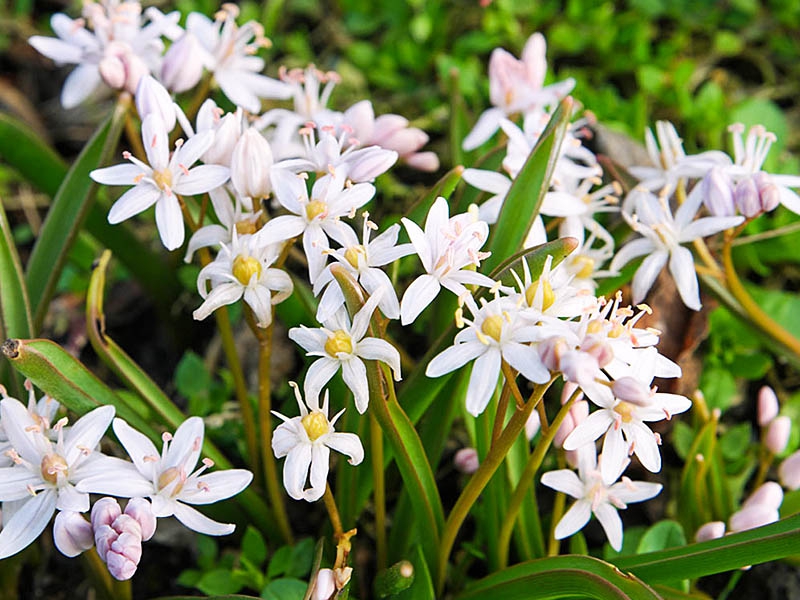
Scilla bifolia 'Rosea' is a perennial plant that produces beautiful pink flowers and grows naturally in forested areas throughout Europe. Growth Characteristics - Growing Environment: It thrives in partial shade and prefers well-drained soil. Excessive sunlight can burn the leaves. - Size: It grows to a height of approximately 10–20 cm and blooms in early spring. - Flowering Season: It blooms annually from March to April. Propagation Methods - Bulbs: Propagation using bulbs is common. Bulbs are planted in the autumn after the summer. - Seeds: Propagation by seeds is also possible, but it may take longer for the plant to bloom. Cultivation Methods - Soil: It grows well in well-drained soil, and adding a small amount of organic fertilizer is beneficial. - Watering: Be careful not to overwater; it is appropriate to water when the surface soil is dry. - Transplanting: Although growth is not rapid, separating and transplanting the bulbs every 3 to 5 years promotes healthy growth. Uses in the Garden - Decorative Effect: Planting them in small clusters adds color to the garden in the spring. - Placement: Using them as clusters under trees or on slopes creates a natural landscape. Important Pests and Diseases & Control Methods - Diseases: Watch out for bulb rot; this can be prevented by ensuring good drainage. - Pests: Mollusks such as snails may gnaw on the new shoots, so attractants can be used to prevent this. If you are growing Silla 'Rosea' in your garden, please refer to these basic cultivation guidelines to enjoy its beautiful flowers.
Plant Type
Plant Family
Broom family
Height
7~15cm
Spread
7~10cm
Colors
white
Bloom Period
March to April
Water Needs
commonly
Exposure
Sunny
Freezing Resistance
-15°C
Sila sardensis
Scilla sardensis
Sila Bipolia
Scilla bifolia