English
한국어
English
Español
中文
हिंदी
Home
News
Community
Dictionary
English
한국어
English
Español
中文
हिंदी
View list
Autumn foxtail
Setaria faberi
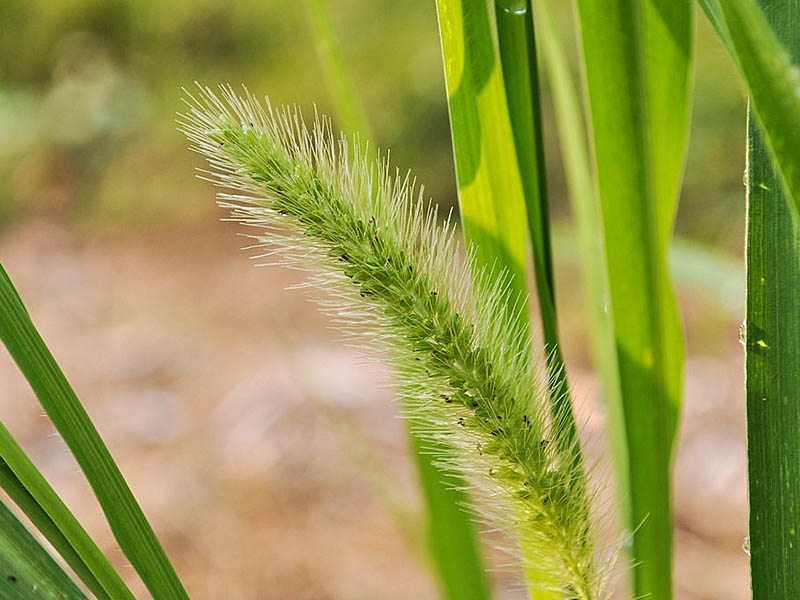
Setaria faberi, also known as autumn foxtail, is an annual plant belonging to the grass family that grows primarily during the summer and autumn. Below, we summarize the plant's main growth characteristics, propagation methods, cultivation methods, garden uses, and important pests and diseases, as well as control methods. - Growth Characteristics: Setaria faberi grows upright, typically reaching a height of 30 to 150 cm. This plant thrives in moist, well-drained soil and grows most vigorously in sunny locations. - Propagation Methods: It reproduces by seeds; the seeds mature and fall in the autumn, scattering naturally in the soil to germinate the following year. Due to its high reproductive capacity, it can quickly form colonies. - Cultivation Methods: It is easy to manage as it has strong vitality and does not require special cultivation techniques. However, care must be taken with drainage, as roots may rot in areas with excessive moisture. 4. Use in Gardens: Fall foxtail is valuable as an ornamental plant, adding a natural touch to gardens, especially during the autumn season. It is suitable for grass gardens or natural gardens. - Major Pests and Control Methods: Although it is a relatively pest-resistant plant, fungal diseases can occasionally occur on the leaves. In such cases, it is recommended to remove the diseased leaves and apply a fungicide. For insects, insect nets or natural insecticides can be used. It is important to observe the plant regularly and take immediate action if any problems arise. As such, fall foxtail grows well without special care and can be effectively utilized to add natural beauty to gardens or parks.
Plant Type
Plant Family
Grass family
Height
40~100cm
Spread
Colors
Green, purple
Bloom Period
September to November
Water Needs
commonly
Exposure
Sunny
Freezing Resistance
-15°C
slender golden foxtail
Setaria pumila subsp. pallide-fusca
Joajaebi
Setaria chondrachne