English
한국어
English
Español
中文
हिंदी
Home
News
Community
Dictionary
English
한국어
English
Español
中文
हिंदी
View list
Chinese porcelain
Acer griseum
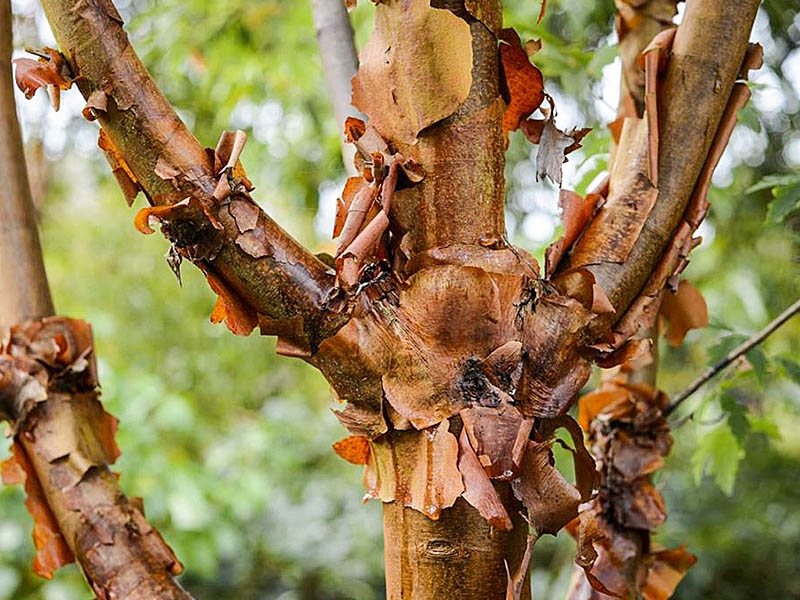
Acer griseum is a deciduous shrub or small tree well known for its attractive bark and beautiful autumn foliage. The following is a guide to the growth characteristics, propagation methods, cultivation methods, garden uses, and major pests and control methods of Acer griseum. Growth Characteristics - Height and Shape: Mature trees typically grow up to 6 to 9 meters tall and possess an elegant, rounded silhouette. - Bark: It boasts unique reddish-brown, peeling bark. - Leaves: They are compound leaves with elongated oval veins. In autumn, they turn a deep red or orange, creating a spectacular sight. - Growing Environment: It thrives in sunny locations and prefers well-drained soil. It has good cold tolerance and adapts to relatively cold climates. Propagation Methods - Seed Propagation: Collect seeds in the autumn and sow them, lightly covering them with soil. However, dehulling and stratification may be necessary. - Grafting: Primarily used during the winter; it is important to ensure a tight fit between the scion and the rootstock. - Cuttings: New shoots are cut in early summer and used with a root development stimulant for effective results. Cultivation Methods - Soil Management: Slightly acidic to neutral soil with good moisture retention and drainage is suitable. - Watering and Fertilization: Provide sufficient water initially, and then rely on natural rainfall. It is recommended to apply organic or slow-release fertilizers in spring and autumn. - Pruning: If necessary, prune during the winter dormancy period to shape the tree into the desired form. Uses in the Garden - Ornamental Tree: This tree attracts attention in gardens and parks due to its beautiful bark and autumn foliage. - Minimalist Design: It is popular for its suitability in neat and harmonious garden designs. Major Pests and Control Methods - Diseases: Common diseases include leaf spot and root rot. Creating an environment with good ventilation and sufficient sunlight can help prevent these diseases. - Pests: Occasionally occurring leafrollers or aphids may be removed manually, or control using natural enemies may be considered. - Chemical Control: If necessary, use suitable insecticides or fungicides, but prioritize eco-friendly alternatives. As such, the Chinese Acer palmatum is relatively easy to care for and adapts well to various environments, making it very useful as a garden plant.
Plant Type
Plant Family
Sapindaceae
Height
6~9m
Spread
4.5~7.5m
Colors
Green, purple
Bloom Period
March to August
Water Needs
commonly
Exposure
Sunny
Freezing Resistance
-30°C
Japanese maple 'Aconitifolium'
Acer japonicum 'Aconitifolium'
Norwegian maple 'Royal Red'
Acer platanoides 'Royal Red'