English
한국어
English
Español
中文
हिंदी
Home
News
Community
Dictionary
English
한국어
English
Español
中文
हिंदी
View list
monkshood
Aconitum umbrosum
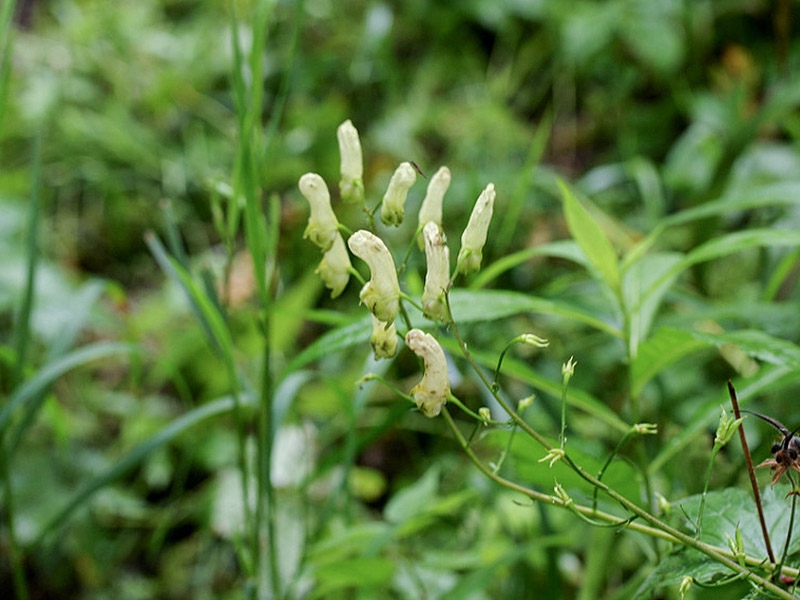
Aconitum umbrosum Growth Characteristics This is a perennial herbaceous plant that thrives primarily in moist environments. It typically grows to a height of 50 to 100 cm and produces flowers ranging from blue to purple. The roots are thickened, and the leaves are palm-shaped and lobed. Propagation MethodsIt can be propagated mainly through root division, seeds, and cuttings. Root division is best done in spring or autumn, while cuttings are best taken in summer. If using seeds, it is recommended to collect them in autumn and sow them in spring. Cultivation MethodsIt grows well in well-drained soil and prefers a partially shaded environment. It is best to avoid strong direct sunlight. Water thoroughly during the growing season, but avoid overwatering. Fertilizing in the spring is effective for early growth. Uses in the GardenDue to its beautiful flowers and unique leaf shape, it is widely used as an ornamental plant in gardens. Due to its showy appearance, it is primarily used as a background plant in flower beds, and it also produces a good effect when planted alongside other perennials. Important Pests and Diseases & Control Methods Important Pests and Diseases: It may be susceptible to insects or fungi. In particular, pests and diseases can occur on the leaves or roots, which can be caused by various insects or leaf molds. Control Methods: - Insects: Regularly monitor for insect infestations and use insecticides if necessary. For natural control, use insecticidal soap made with sulfuric acid. - Fungi: Avoid excessive moisture and ensure good ventilation to minimize fungal growth. If fungi have already occurred, control them using appropriate fungicides. Based on the information above, you can successfully cultivate and manage Aconitum.
Plant Type
Plant Family
Ranunculaceae
Height
50~120cm
Spread
Colors
white, yellow
Bloom Period
July–August
Water Needs
commonly
Exposure
semi-shaded area
Freezing Resistance
-30°C
Winged culprit
Aconitum pteropus
Halla hinge
Aconitum japonicum subsp. napiforme