English
한국어
English
Español
中文
हिंदी
Home
News
Community
Dictionary
English
한국어
English
Español
中文
हिंदी
View list
Reynolds Aloe
Aloe reynoldsii
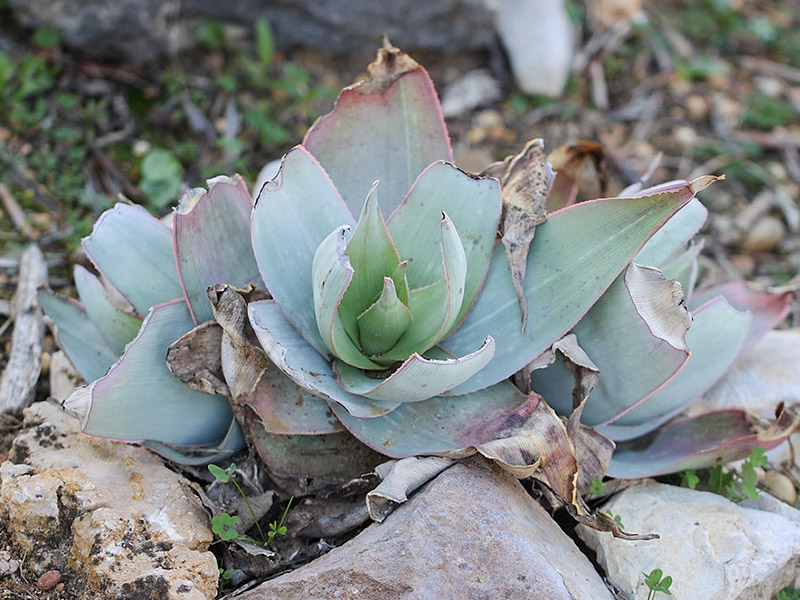
Aloe reynoldsii is a succulent plant that boasts a unique appearance and beautiful flowers. The following is information regarding this plant's growth characteristics, propagation methods, cultivation techniques, garden uses, and important pests and diseases and control methods. Growth Characteristics Aloe reynoldsii grows in a rosette form and is characterized by thick, fleshy leaves. The leaves are grayish-green or bluish-green, pointed at the tips, and have slightly serrated edges. This plant blooms with yellow flowers from spring to summer and can grow up to about 30 cm in height. It adapts well to dry environments and thrives in sunny locations. Propagation Methods Aloe reynoldsii is primarily propagated by roots or division. It is common to separate offshoots grown from the trunk and plant them in different pots. Propagation is also possible via leaf cuttings. When taking leaf cuttings, select a healthy leaf, cut it off, let the cut end dry to heal, and then plant it in soil. Cultivation Method - Soil: Well-draining soil is required. Generally, a soil mixture specifically for cacti or sandy soil is suitable. - Watering: Be careful not to overwater. Water only when the soil is completely dry, and reduce watering during the winter. - Sunlight: It is best to grow it in a location where it receives ample sunlight. If grown indoors, a south-facing window is suitable. - Temperature: Growth may slow down in cool environments, so it is recommended to maintain a warm temperature. Uses in the Garden Aloe reynolds' claw is widely used for landscaping. It is excellent as an accent plant in gravel gardens or cactus gardens, and can also be grown as part of a succulent collection. Additionally, due to its unique appearance and relatively easy care, it is suitable for urban rooftop gardens or balcony gardens. Important Pests and Control Methods Aloe reynolds' claw can be damaged primarily by scale insects and aphids. The following are the major pests and their control methods. - Scale insects: They secrete a sticky nectar that damages the leaves. To control them, you can remove the insects by soaking a cotton swab in alcohol or by wiping the plant with soapy water. - Aphids: They suck the plant's sap, causing leaf discoloration. They can be controlled by spraying with soapy water or using pesticides. This plant is relatively resistant to pests and diseases, so it can be grown without major problems if kept healthy in a well-drained environment.
Plant Type
Plant Family
Lily family
Height
30~60cm
Spread
Colors
yellow
Bloom Period
September
Water Needs
Bad
Exposure
Sunny
Freezing Resistance
-5°C
Aloe secundiflora
Aloe secundiflora
Aloe Ramoisima
Aloe ramoissima