English
한국어
English
Español
中文
हिंदी
Home
News
Community
Dictionary
English
한국어
English
Español
中文
हिंदी
View list
Aloe caescia
Aloe caesia
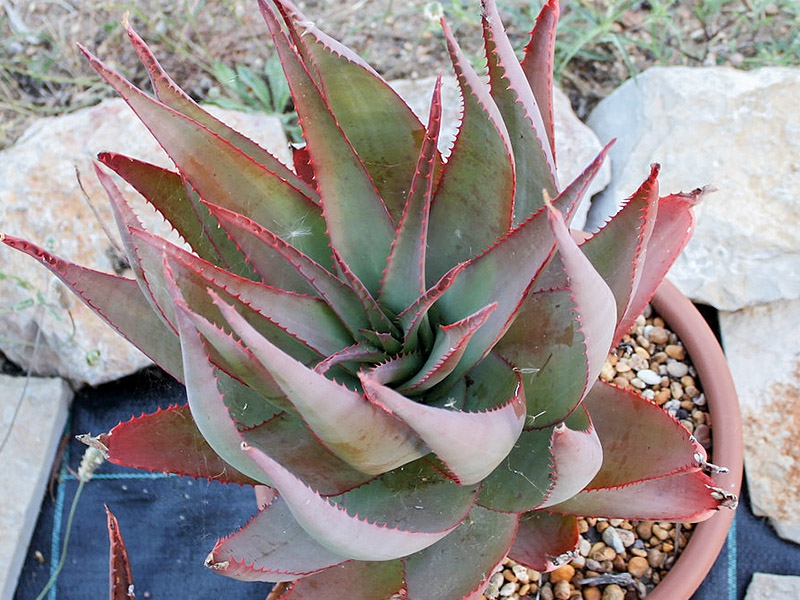
Aloe caesia has the following characteristics regarding growth, propagation, cultivation, garden use, and important pests and diseases, as well as control methods. Growth Characteristics - Growing Environment: As a succulent plant, Aloe caesia thrives in warm, dry climates. It requires plenty of sunlight and grows vigorously in well-drained soil. - Appearance: This plant has elongated leaves with a bluish-green surface. Mature plants produce long flower stalks and bloom with red or orange flowers, primarily in winter. Propagation Methods - Propagation: Aloe caesia is mainly propagated by division or leaf cuttings. Division involves separating offsets formed next to a mature plant and planting them, while leaf cuttings involve cutting off a leaf, drying it, and planting it in soil to encourage rooting. Cultivation Methods - Planting: Plant in a pot of appropriate size using well-draining soil. It is recommended to use soil specifically designed for succulents or soil mixed with sand. - Watering: Overwatering can lead to root rot, so it is important to water only after the soil has dried out. Reduce watering during the winter. Garden Uses - Usage: Aloe caescia is widely used as a garden ornament due to its unique coloration and flowers. It is well-suited for rock gardens or gardens featuring cacti and succulents. Important Pests and Diseases & Control Methods - Diseases: Root rot can occur if the plant is overwatered; therefore, proper drainage management is essential to prevent this. - Pests: Sap-sucking pests (e.g., scale insects) may occur. If they appear, wipe the affected area with a cotton ball soaked in alcohol or use an appropriate insecticide. - General Control: Regularly inspect the plant's condition and use a fungicide if necessary.
Plant Type
Plant Family
Lily family
Height
1.5m
Spread
Colors
orange
Bloom Period
May to July
Water Needs
Bad
Exposure
Sunny
Freezing Resistance
-5°C
Aloe Cameroni
Aloe cameronii
Aloe brevifolia
Aloe brevifolia