English
한국어
English
Español
中文
हिंदी
Home
News
Community
Dictionary
English
한국어
English
Español
中文
हिंदी
View list
Aloe rubroviolachea
Aloe rubroviolacea
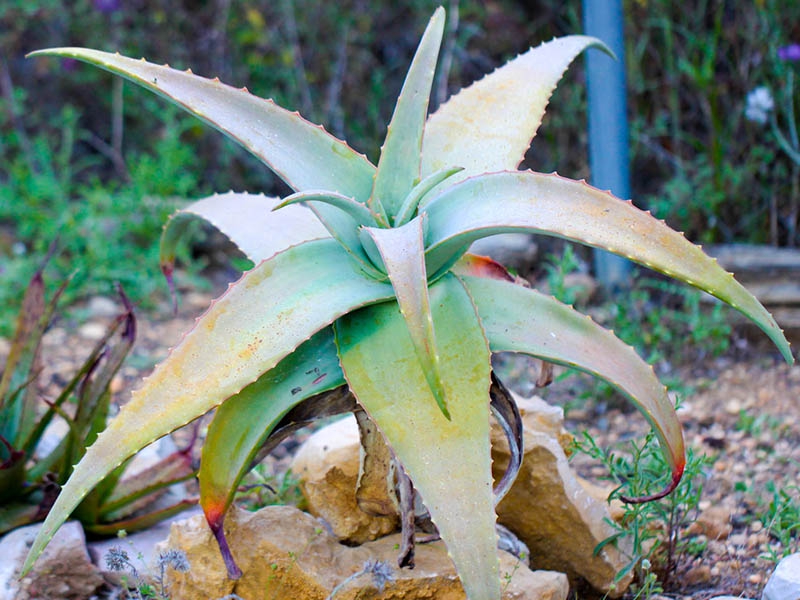
Growth Characteristics Aloe rubroviolacea is a succulent plant native primarily to the arid regions of the Arabian Peninsula and Africa. This plant possesses high ornamental value due to its thick leaves and leaf margins that turn red or purple. It displays more vivid colors in sunny locations. Propagation Methods Aloe rubroviolacea is mainly propagated by leaf cuttings or division. For leaf cuttings, select a healthy leaf, cut it off, and let the cut surface dry for a few hours. Then, plant it in well-draining soil and maintain adequate humidity to encourage root development. Cultivation Methods This aloe must be grown in well-draining soil. It is recommended to use general potting soil designed for succulents. Since it requires sufficient sunlight for its colors to develop beautifully, it should be placed in a sunny location. It is generally best to water thoroughly only after the soil has completely dried out. Care must be taken, as it is susceptible to root rot if water is overwatered or if drainage is poor. Use in the Garden Aloe rubrobiolacea can be grown in pots indoors or outdoors, or used as a border plant in the garden. Its attractive color-changing leaves make it an excellent decorative element. It pairs particularly well with rock gardens or cactus gardens. Key Pests and Control Methods Major pests and diseases include sap rot and scale insects. Sap rot can be controlled by rubbing with alcohol or using specialized insecticides. Scale insects should be removed with an alcohol-soaked cotton swab upon early detection, and in severe cases, insecticide should be sprayed over the entire plant. Additionally, attention must always be paid to drainage to prevent root rot caused by overwatering.
Plant Type
Plant Family
Lily family
Height
60~90cm
Spread
120~180cm
Colors
orange
Bloom Period
March to August
Water Needs
Bad
Exposure
Sunny
Freezing Resistance
-5°C
Aloe Baombe
Aloe vaombe
Aloe petricola
Aloe petricola