English
한국어
English
Español
中文
हिंदी
Home
News
Community
Dictionary
English
한국어
English
Español
中文
हिंदी
View list
Scotianum Scotianum
Angraecum scottianum
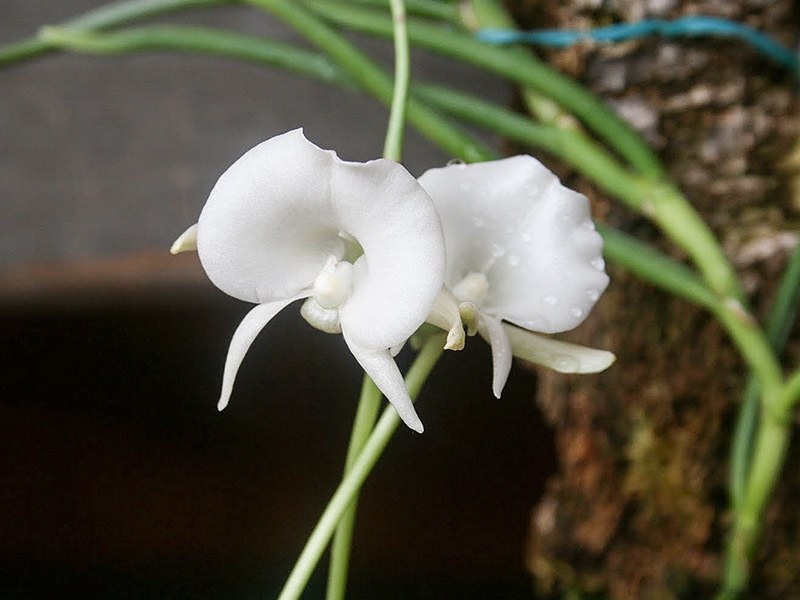
Growth Characteristics of Angraecum scottianum Angraecum scottianum is an epiphytic orchid that grows attached to trees or rocks. This plant thrives in climates ranging from temperate to tropical regions and prefers environments with sufficient moisture. The leaves are thick and leathery, and the flowers are primarily white, blooming on long flower stalks. The flowers are fragrant, and the scent usually becomes stronger in the evening. Propagation Methods Angraecum scottianum is primarily propagated by two methods: seed propagation and division. For seed propagation, sterile culture may be required to germinate the seeds due to the nature of epiphytic orchids. Division is a simpler method that involves dividing the root system to form new individuals. The common method involves detaching a tender shoot from a healthy mother plant and planting it separately. Cultivation Methods - Lighting: It requires bright indirect light. Direct sunlight should be avoided as it can burn the leaves. 2. Temperature: It is recommended to maintain a temperature of 20 to 25 degrees Celsius during the day and 15 to 18 degrees Celsius at night. - Humidity: High humidity (over 50%) must be maintained, and it is important to ensure ventilation by watering periodically. - Watering: Water after the topsoil has dried, but avoid overwatering. It is recommended to use potting soil with good drainage. - Fertilizer: During the growing season, it is recommended to apply diluted fertilizer once every two weeks. Uses in the Garden Scotianum is highly suitable for garden decoration due to its distinctive fragrance and beautiful flowers. It can be planted in pots or used as an epiphyte on other trees in outdoor spaces to highlight its natural charm. Important Pests and Control Methods Major pests include aphids, scale insects, and fungal diseases. Aphids and scale insects require regular observation and must be removed immediately upon discovery. In the case of fungal diseases, improving ventilation and creating an environment with good drainage helps with prevention. If the problem is severe, using appropriate fungicides or insecticides may also be considered.
Plant Type
Plant Family
Orchid family
Height
10cm
Spread
6cm
Colors
white
Bloom Period
August~September
Water Needs
commonly
Exposure
Sunny
Freezing Resistance
-5°C
Deal
Anethum graveolens
Old text
Angelica tenuissima