English
한국어
English
Español
中文
हिंदी
Home
News
Community
Dictionary
English
한국어
English
Español
中文
हिंदी
View list
Anisacanthus quadripidus var. raiti
Anisacanthus quadrifidus
var.
wrightii
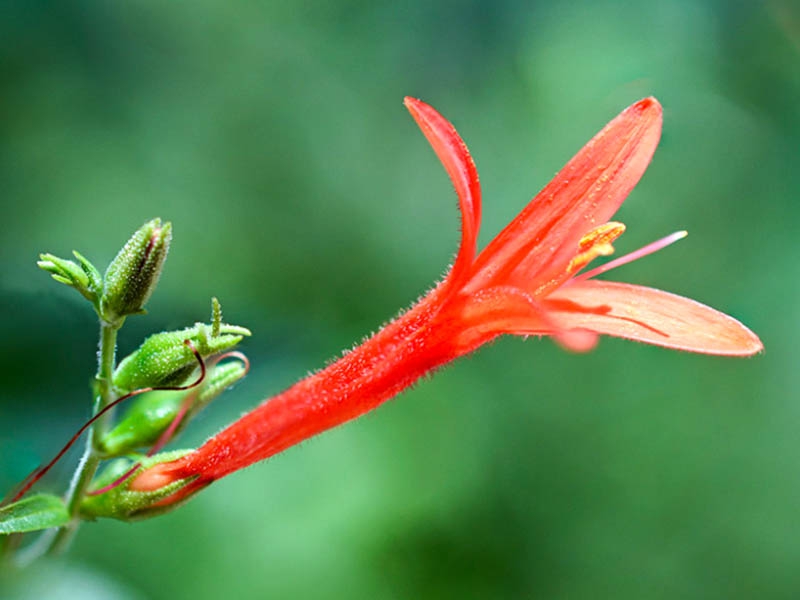
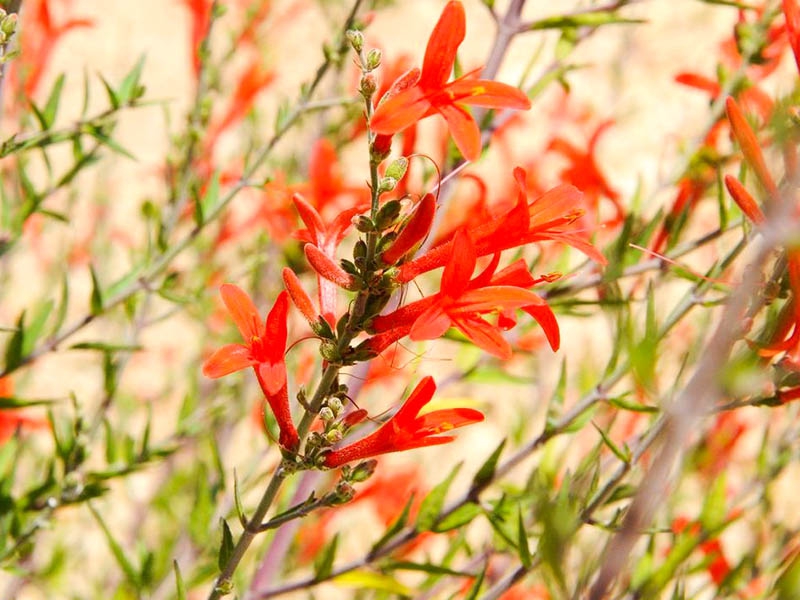
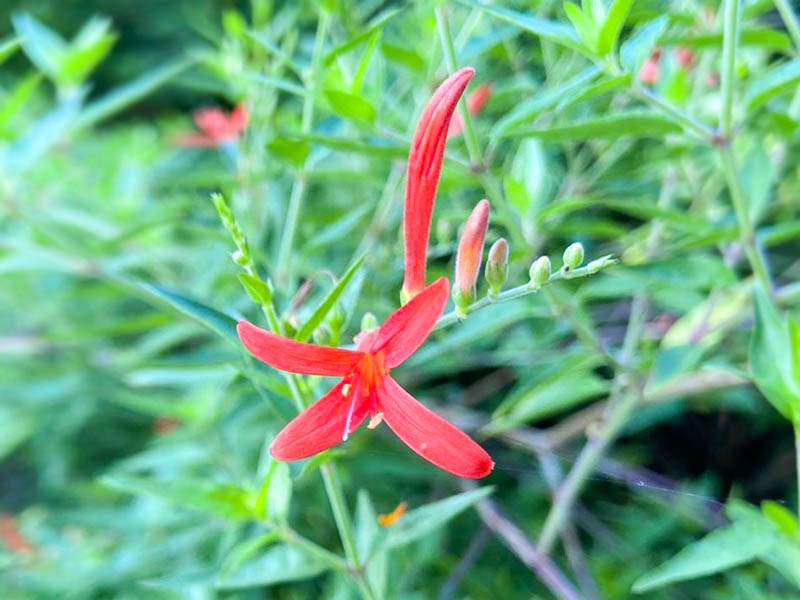
Anisacanthus quadrifidus var. wrightii Growth Characteristics: - This plant is native primarily to southern North America, particularly the Texas region. - It prefers warm, dry climates and can grow up to approximately 1.5 meters tall. - It blooms with red flowers from summer to autumn and is known for attracting bees and butterflies. Propagation Methods: - It can be propagated by seeds or cuttings. - Seeds are sown in the spring in well-drained soil. - Cuttings are taken in the summer; healthy branches are placed in water or planted directly in the soil to encourage rooting. Cultivation Methods: - It is important to select a sunny location. - It thrives in well-drained soil and is particularly adaptable to dry environments. - While it requires ample watering initially, it is drought-tolerant thereafter, so it does not need to be watered too frequently. Use in Gardens: - Suitable as a border or background plant, it can be utilized in ecological gardens as a flower that attracts bees and butterflies. - Arranging it alongside other plants that thrive in dry climates can create a harmonious landscape. Important Pests and Control Methods: - Generally resistant to pests, but root rot may occur if the soil is excessively wet. - Aphids and spider mites may rarely occur; appropriate pesticides should be used to control them. - Managing pests using natural insecticides or organic farming methods is also a good approach.
Plant Type
Plant Family
Rat-tail grass
Height
90~150cm
Spread
90~120cm
Colors
orange
Bloom Period
June to August
Water Needs
well
Exposure
Sunny
Freezing Resistance
-10°C
Kangaroo Paw
Anigozanthos flavidus
Baby hibiscus
Anisodontea capensis