English
한국어
English
Español
中文
हिंदी
Home
News
Community
Dictionary
English
한국어
English
Español
中文
हिंदी
View list
Poribangi
Youngia japonica
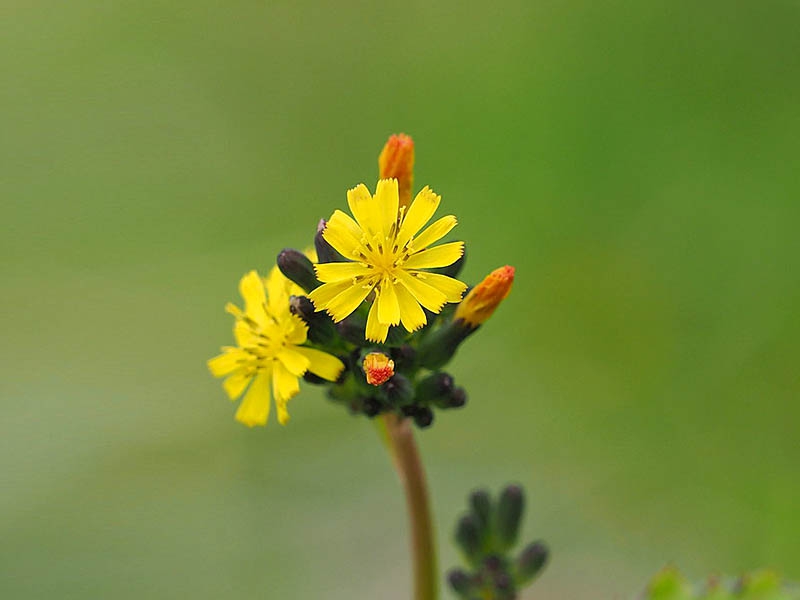
Growth Characteristics Youngia japonica is a perennial plant belonging to the Asteraceae family and is native primarily to Asia. This plant thrives even in shady areas and possesses strong cold tolerance, allowing it to survive through cold winters. It typically grows to a height of 30 to 60 cm and blooms with yellow flowers, particularly in the spring. Propagation Methods Youngia japonica is primarily propagated by seeds. Small seeds are formed after the flowers wither and are easily dispersed by the wind. Due to its strong reproductive capacity, it can reproduce rapidly in suitable environments. It grows well when sown in spring or autumn. Cultivation Methods - Soil: It thrives in well-drained soil and grows without special fertilizers. - Watering: It dislikes excessive watering, so water only when the soil is dry. - Sunlight: It prefers partial shade or full sun. Use in the Garden Silkworm puffer requires minimal maintenance, making it suitable for garden planting. It is primarily used to create a natural-looking garden. Its bright yellow flowers add a vibrant touch, making it an excellent accent for the garden. Important Pests and Control Methods Silkworm puffer is relatively resistant to pests and diseases, but caution is required regarding certain fungal diseases and aphids. To prevent these issues, the following methods can be used: - Fungi: Avoid overwatering and plant the plant in a well-ventilated area. - Aphids: If damage occurs, they can be controlled by washing them off with water or using organic insecticides. Additionally, natural control methods utilizing natural predators can be considered. Silkworm puffer is a highly adaptable plant that can easily thrive in various environments. This characteristic makes it easy to decorate gardens or outdoor spaces.
Plant Type
Plant Family
Asteraceae
Height
15~100cm
Spread
Colors
yellow
Bloom Period
May~June
Water Needs
commonly
Exposure
Sunny
Freezing Resistance
-10°C
Godeulppaegi
Crepidiastrum sonchifolium
Igo-deulppaegi
Crepidiastrum denticulatum