English
한국어
English
Español
中文
हिंदी
Home
News
Community
Dictionary
English
한국어
English
Español
中文
हिंदी
View list
European wild mustard
Barbarea vulgaris
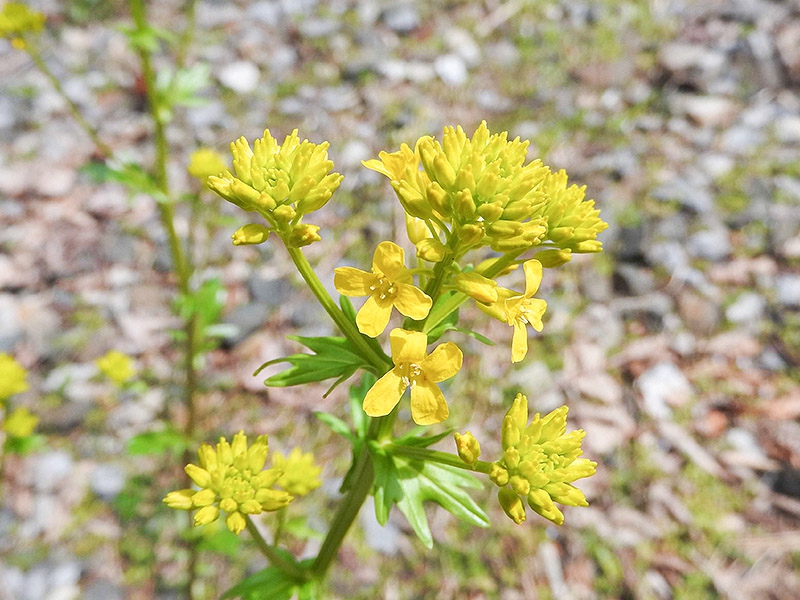
Barbarea vulgaris is a perennial herb belonging to the Brassica family and is native to Europe. The following is information regarding the growth characteristics, propagation methods, cultivation methods, garden uses, and major pests and diseases, as well as control methods. Growth Characteristics - Height: It typically grows to about 30–90 cm. - Leaves: They are alternate and pinnately divided. - Flowers: Small, showy yellow flowers bloom. Flowering usually occurs between spring and early summer. - Habitat: Barbarea vulgaris grows in various soil types but prefers well-drained soil. It thrives in full sun or partial shade. Propagation Methods - Seed Propagation: Barbarea vulgaris is primarily propagated by seeds. If seeds are sown in late spring or early summer, they germinate in the autumn. - Germination Conditions: Seeds germinate well in well-lit areas and require a small amount of moisture for germination. Cultivation Method - Soil Preparation: Cultivate in well-drained soil rich in organic matter. A neutral to slightly acidic soil pH is ideal. - Watering: Although it tolerates relatively dry conditions, regular watering is necessary for healthy growth. - Fertilizer: During the growing season, it is recommended to apply fertilizers with a high nitrogen content. Uses in the Garden - European Cardamine can be used as a landscape plant for garden edges or flower beds. - Its showy flowers attract bees and butterflies, contributing to increased ecological diversity. Important Pests and Diseases & Control Methods - Diseases: Leaf fungal diseases may occur; cultivate in a well-ventilated environment and manage moisture strictly. - Pests: Cabbage white butterflies and aphids are the primary pests. Biological control methods include using beneficial insects or applying plant-based oil sprays. - Chemical Control: In severe cases, pesticides may be used, but always consult the instructions before use. Based on this information, make good use of European cress in your garden!
Plant Type
Plant Family
Cruciferae
Height
30~80cm
Spread
Colors
yellow
Bloom Period
June~July
Water Needs
commonly
Exposure
semi-shaded area
Freezing Resistance
-15°C
Nado-naengi
Barbarea orthoceras
Moss Falcata
Bartramia falcata