English
한국어
English
Español
中文
हिंदी
Home
News
Community
Dictionary
English
한국어
English
Español
中文
हिंदी
View list
King's hat grass
Carex rhynchophysa
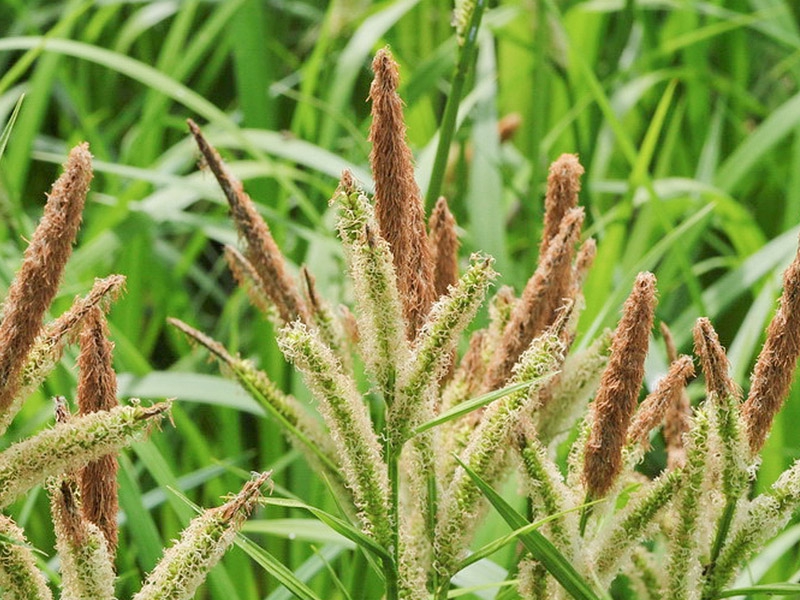
Growth Characteristics Carex rhynchophysa is a perennial plant that thrives in wetlands or damp areas. It grows well even in shady places and generally requires moderate sunlight and moisture. It grows to a height of approximately 30 to 90 cm and is characterized by its long, green leaves. Propagation Methods Carex rhynchophysa is primarily propagated by seeds and root division. For seeds, it is best to sow them directly in the spring or sow them indoors and transplant them immediately. For root division, the method of dividing and planting roots is used in spring or autumn. Cultivation Methods - Soil Preparation: Well-draining soil that retains moisture is suitable. Soil with a high organic matter content is ideal. - Planting: Spring or autumn is appropriate for planting; care should be taken not to bury the roots too deeply when planting. - Watering: Since it prefers a humid environment, water regularly. Water thoroughly, especially during dry periods. 4. Fertilizer: Applying loose plant-based fertilizer during the growing season promotes healthier growth. Uses in the GardenSedges are primarily used for ornamental purposes in gardens. Because they thrive in humid conditions, they are suitable for planting in wetland gardens or around ponds. Since they grow well even in shady areas, they can be utilized in a variety of environments. Important Pests and Control MethodsSedges are generally resistant to pests and diseases, but fungal diseases can occur due to excessive moisture. To prevent this, it is important to provide a well-ventilated environment and avoid overwatering. If pests or diseases occur, they can be controlled using appropriate fungicides.
Plant Family
Cyperaceae
Height
60~100cm
Colors
White, brown, green
Bloom Period
June~July
Water Needs
commonly
Exposure
semi-shaded area
Freezing Resistance
-20°C
Jinnampo Sacho
Carex rigescens
Root sedge
Carex rhizopoda